EN 17092 Motorcycle Garment Standard Guide
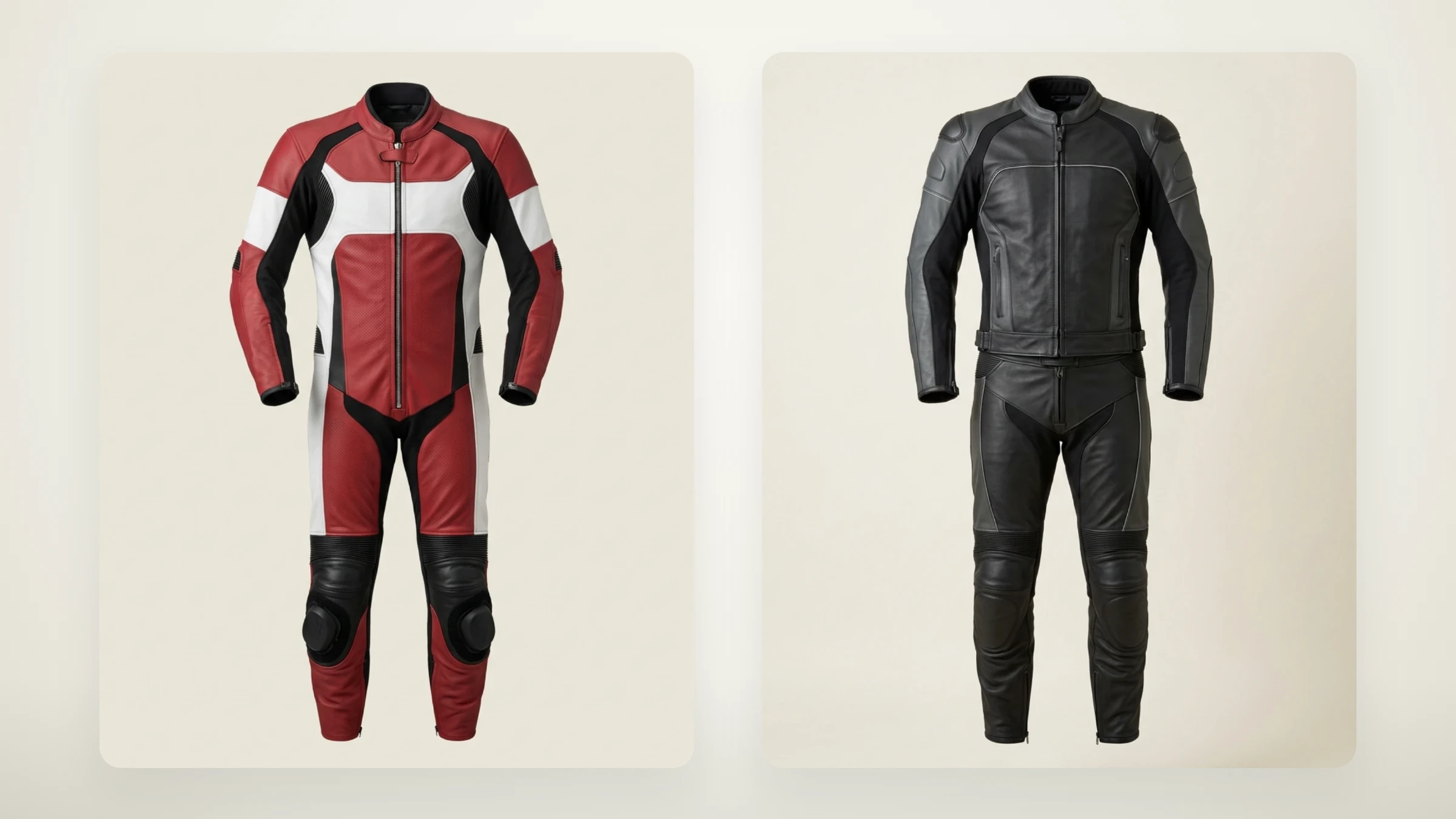
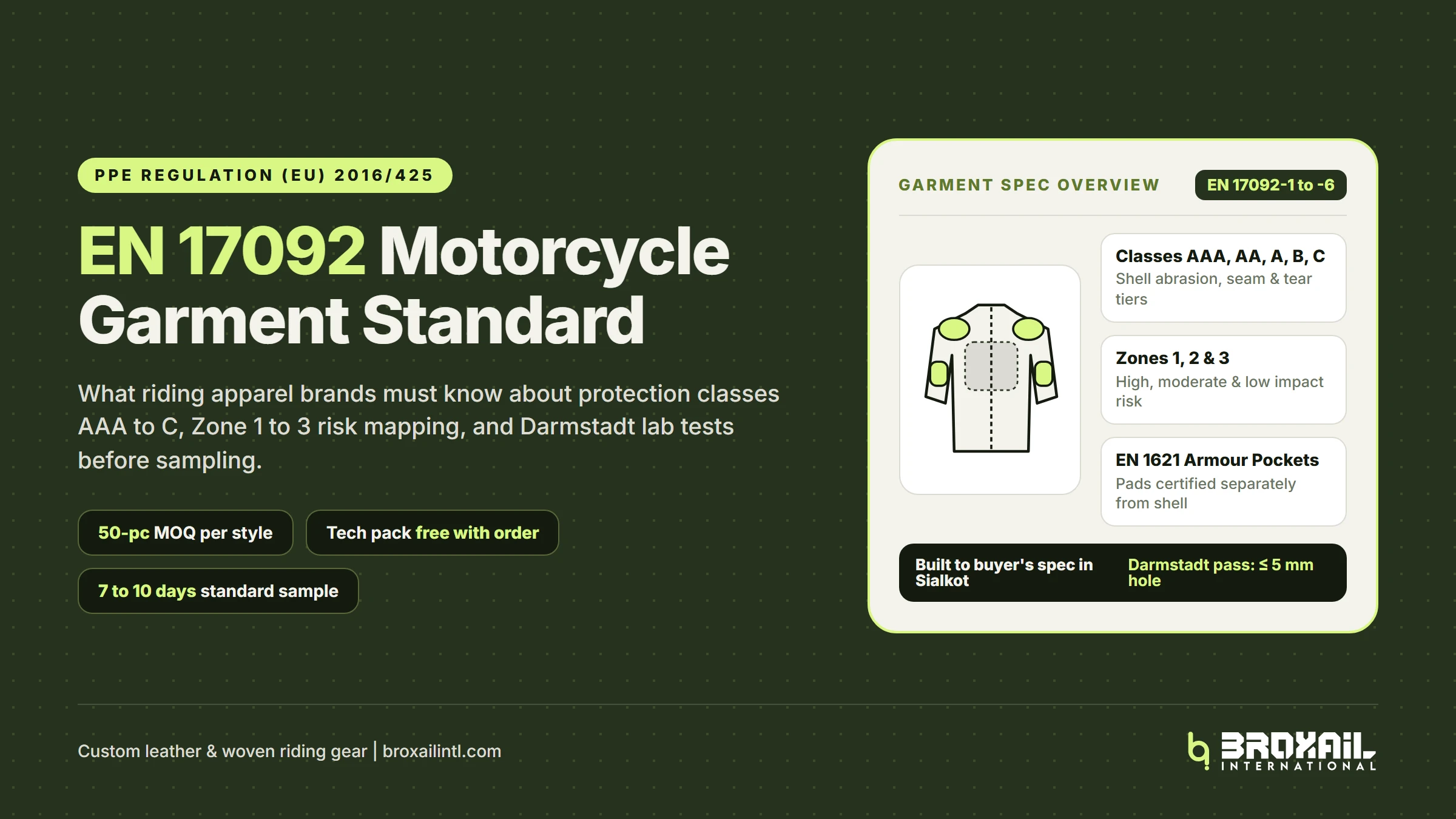
The EN 17092 motorcycle garment standard is the European safety benchmark for protective motorcycle jackets, trousers, and racing suits sold in the EU and UK. Under PPE Regulation (EU) 2016/425, a riding jacket sold as protective clothing needs CE certification, and brands usually get it by testing the finished garment to EN 17092.
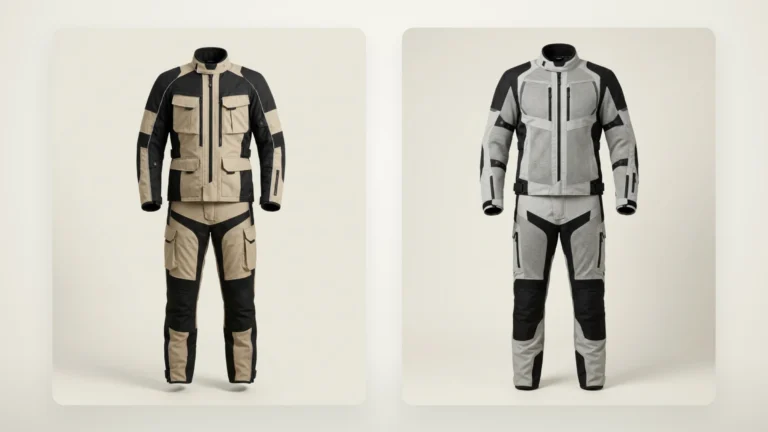
For apparel startups and powersports brands, understanding EN 17092 early prevents costly pattern redesigns before sampling begins. The standard evaluates the entire garment shell, seam construction, tear resistance, and impact protector placement across five protection classes: AAA, AA, A, B, and C.
At BROXAIL International in Sialkot, Pakistan, we manufacture custom leather and woven textile riding gear to your exact specification at a 50-piece MOQ per style and design, including a free tech pack, 7 to 10 day standard sampling, and 3 weeks bulk production after sample approval.
Key takeaways
- Five Garment Classes: EN 17092 classifies protective riding gear from track-grade Class AAA (EN 17092-2) down to touring Class AA, urban Class A, abrasion-only Class B, and armour carrier Class C.
- Three Risk Zones: Pattern makers map high-risk Zone 1 (shoulders, elbows, hips, knees), moderate Zone 2, and breathable Zone 3 panels across the garment shell.
- Lab Test Benchmarks: Accredited labs evaluate Darmstadt impact abrasion (no hole over 5 mm in the inner layer), tear strength, seam tensile force, dimensional stability, and PPE chemical safety.
- Factory Spec & MOQ: BROXAIL builds custom riding shells and EN 1621 armour pockets to buyer’s spec for third-party lab submission from 50 pieces per style, tech pack free with order, 7 to 10 day standard sampling, and 3 weeks bulk.
What is the EN 17092 motorcycle garment standard and why does it matter?
EN 17092 is the harmonised European technical standard that defines safety, abrasion, tear, seam, and ergonomic requirements for protective motorcycle clothing. It replaced the older EN 13595 standard and applies to jackets, trousers, one-piece suits, and protective undergarments.
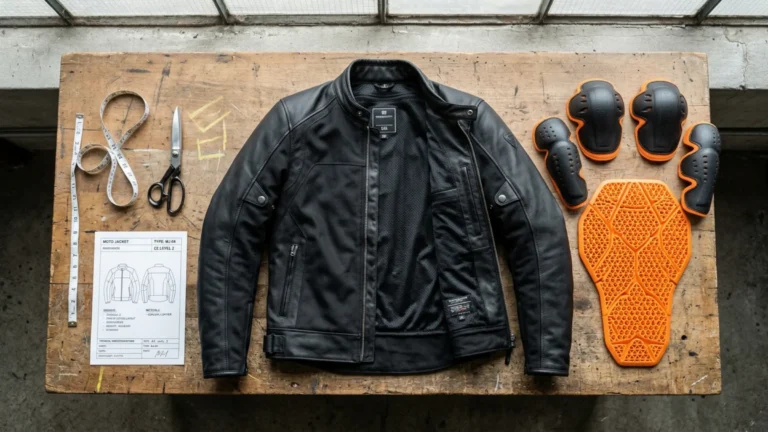
First, buyers often confuse garment certification with impact pad certification. Under European PPE rules, EN 1621 certifies the removable shoulder, elbow, hip, or back protector itself, while EN 17092 certifies the complete outer garment holding those pads in place. You can read our detailed breakdown of pad force limits in our CE Level 2 armour guide.
Second, EN 17092 divides the standard into six parts. EN 17092-1 defines the test methods and risk zones, while EN 17092-2 through EN 17092-6 set the pass thresholds for Classes AAA, AA, A, B, and C.
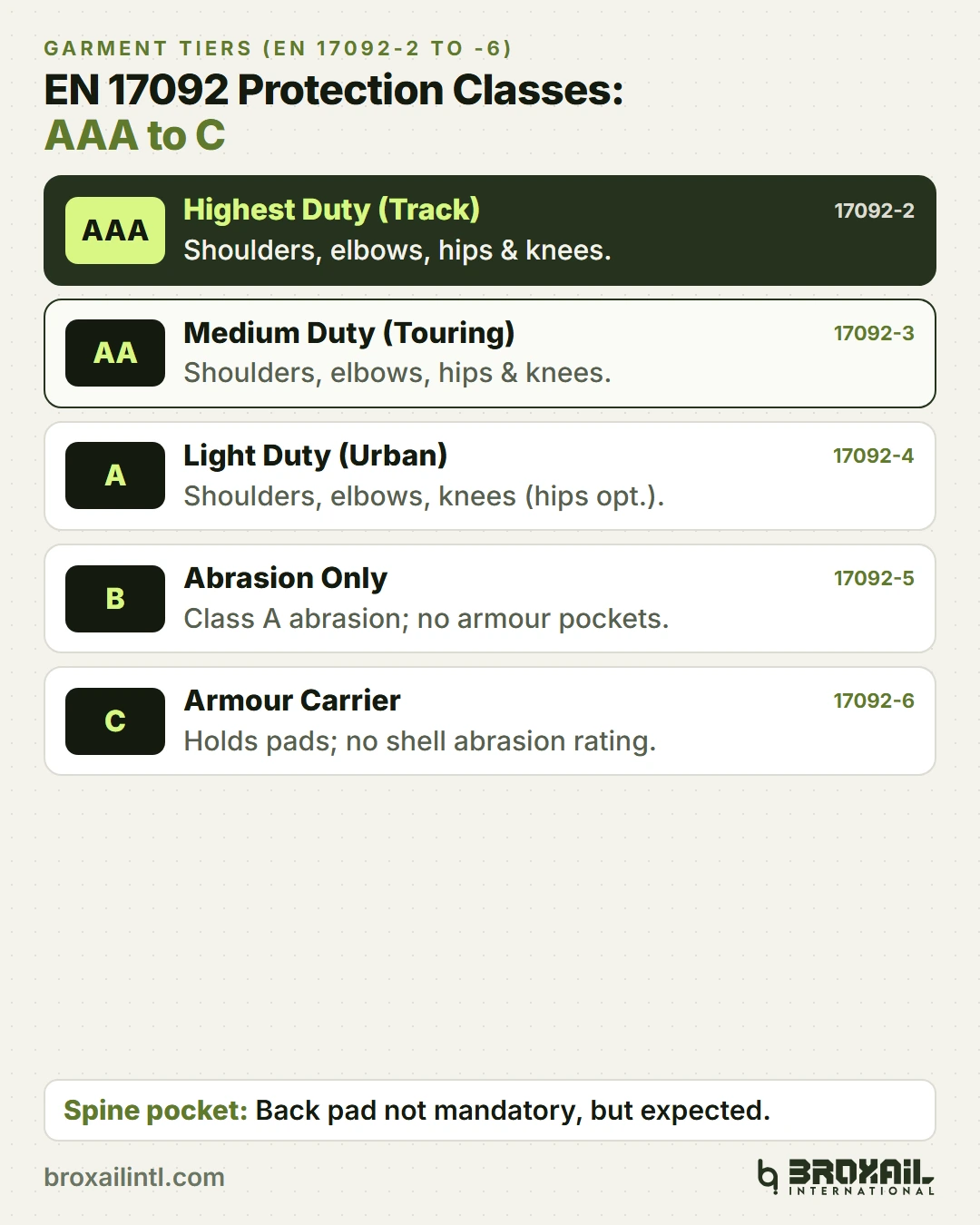
What are the five EN 17092 garment classes (AAA, AA, A, B, and C)?
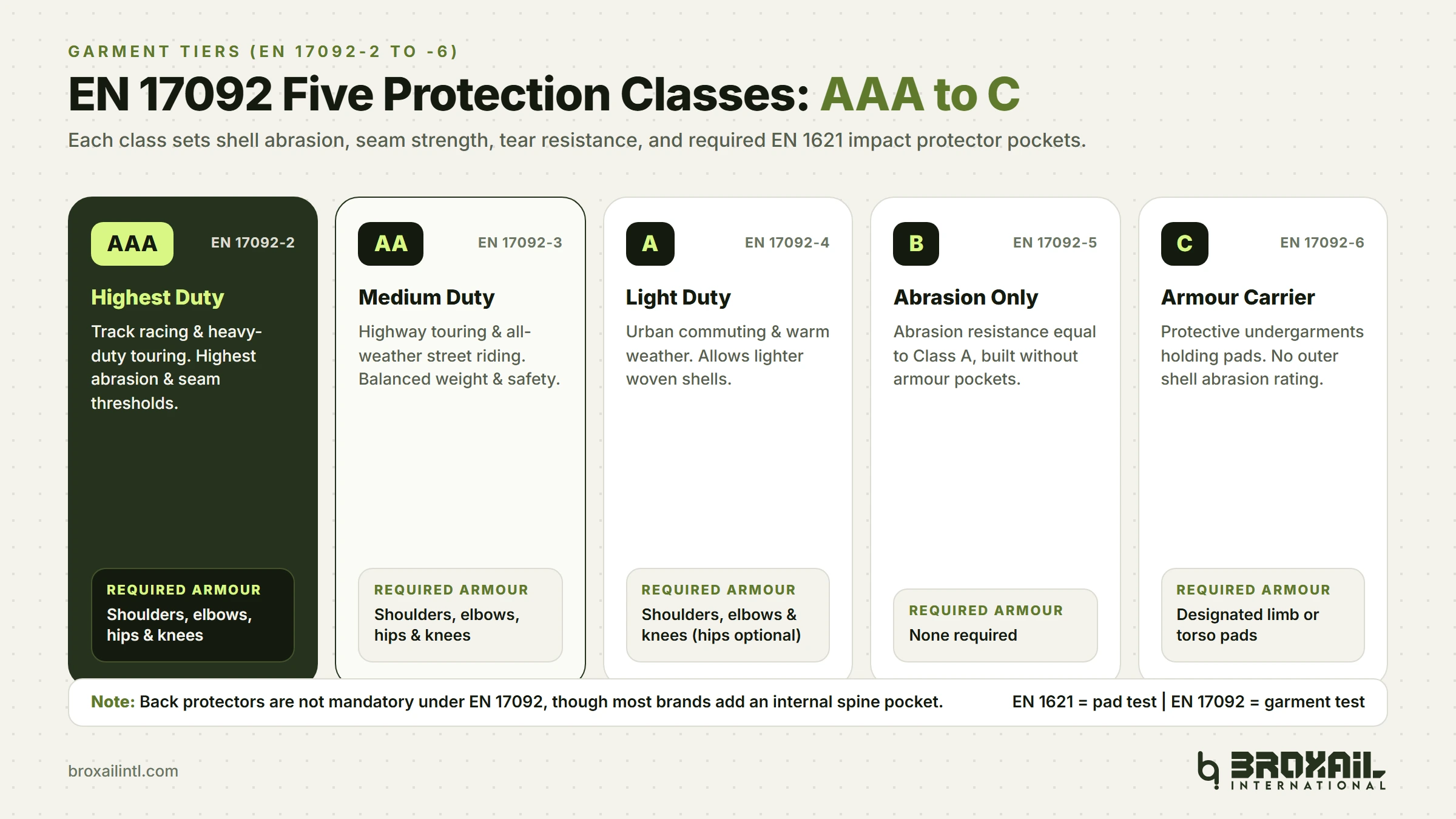
EN 17092 groups protective motorcycle garments into five classes based on abrasion resistance, seam strength, tear resistance, and whether impact protectors are included.
| EN 17092 Class | Standard Part | Protection Tier and Use Case | Required Impact Protectors |
|---|---|---|---|
| Class AAA | EN 17092-2 | Highest duty protection for track racing and heavy touring | Shoulders, elbows, hips, and knees |
| Class AA | EN 17092-3 | Medium duty protection for highway touring and all-weather riding | Shoulders, elbows, hips, and knees |
| Class A | EN 17092-4 | Light duty protection for urban commuting and warm weather | Shoulders, elbows, and knees (hips optional) |
| Class B | EN 17092-5 | Abrasion protection equal to Class A with no armour pockets | None required |
| Class C | EN 17092-6 | Impact protector carrier undergarments with no shell abrasion rating | Designated limb or torso pads |
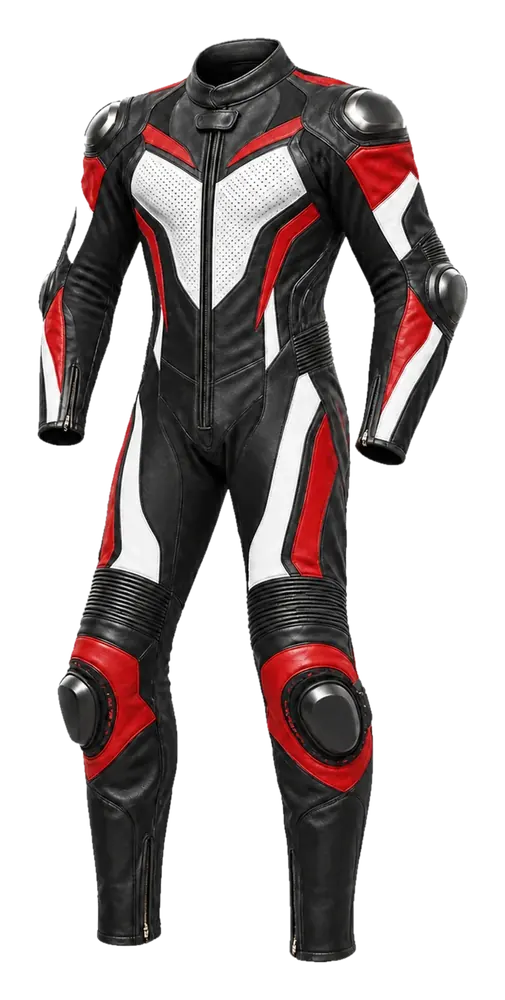
Choosing the right target class shapes your material bill of materials from day one. For example, a Class AAA race suit typically uses heavy cowhide or kangaroo leather, whereas a Class A urban jacket allows lighter woven textiles or fashion hides built to your specification.
In addition, notice that back protectors are not mandatory under EN 17092 for Class AAA, AA, or A certification. However, experienced riders expect an internal spine pocket, so most brands specify a pocket sized for a CE Level 1 or Level 2 back insert.
How do Zone 1, Zone 2, and Zone 3 risk areas work on a riding jacket?
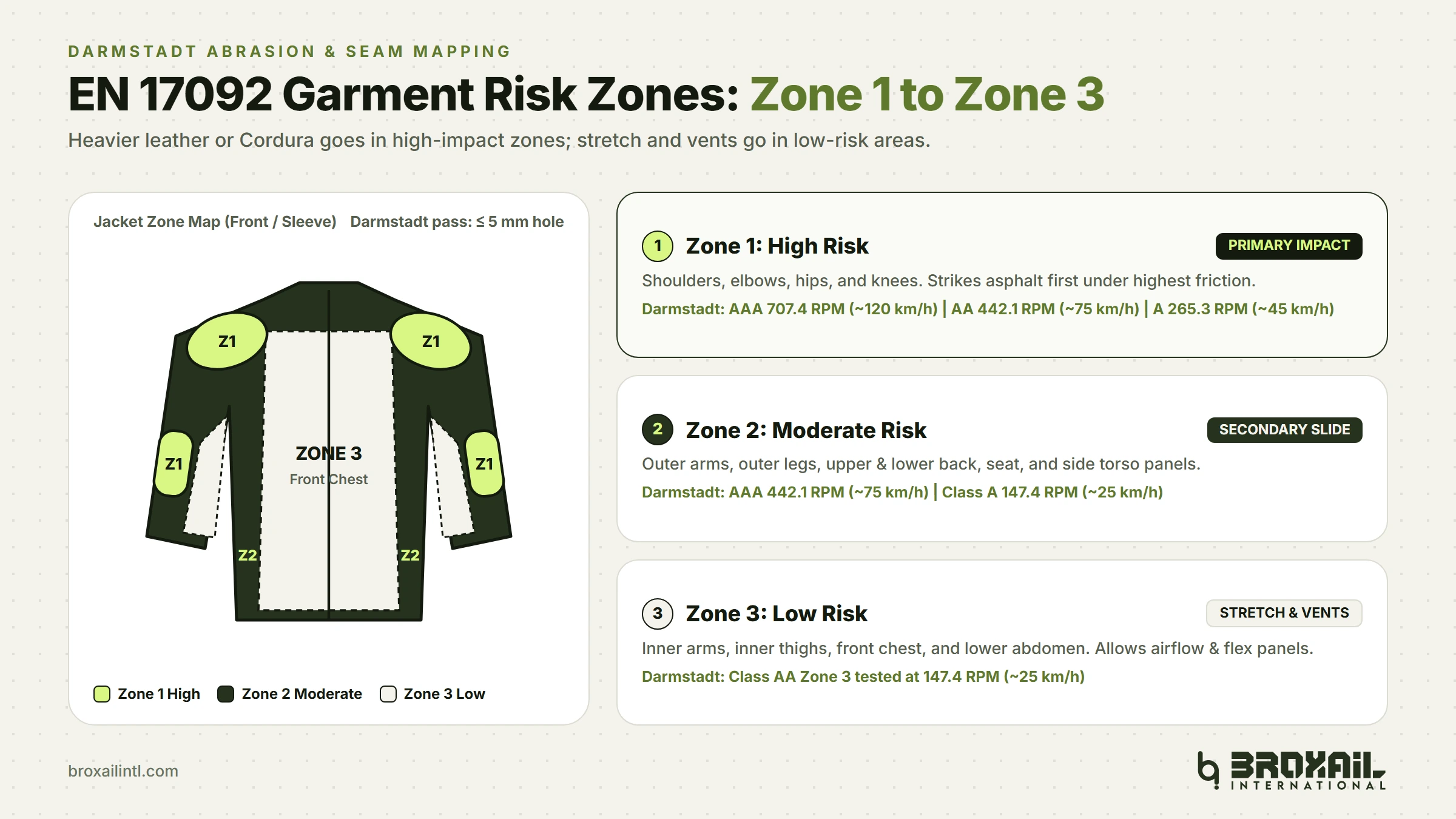
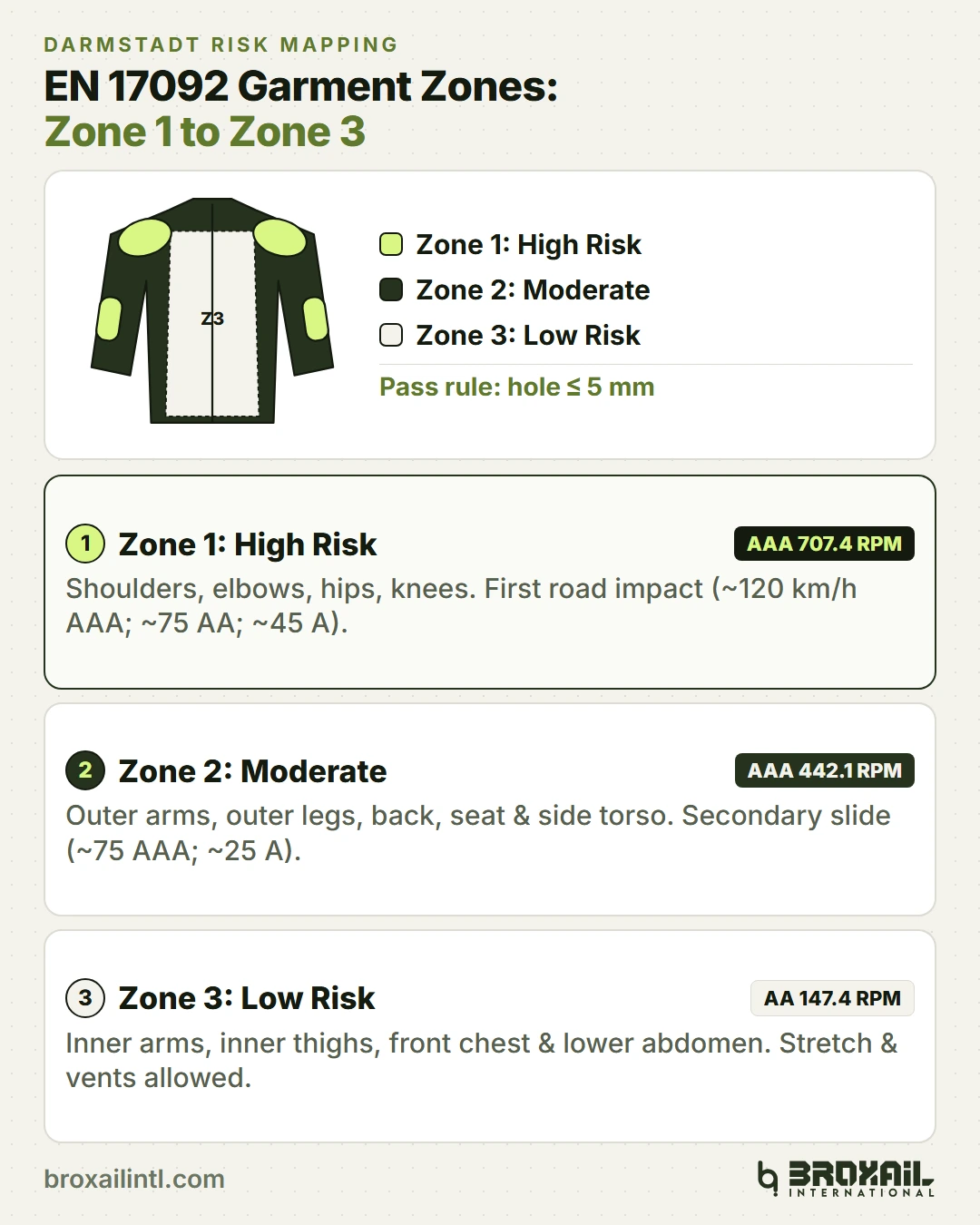
EN 17092 maps every motorcycle jacket and pair of trousers into three anatomical risk zones based on where riders hit asphalt during a crash. This zoning system lets brands place heavy abrasion-resistant panels where impact is most likely, while using lighter, breathable fabrics in low-risk areas.
- Zone 1 (High Risk): Shoulders, elbows, hips, and knees. These areas strike the road first and take the highest frictional load, so they face the strictest abrasion, tear, and seam strength thresholds.
- Zone 2 (Moderate Risk): Outer arms, outer legs, upper and lower back, seat, and side torso panels. These areas face secondary sliding forces.
- Zone 3 (Low Risk): Inner arms, inner thighs, front chest, and lower abdomen. These zones carry the lowest abrasion thresholds, allowing stretch panels or ventilation vents to improve rider comfort.
When you draft your tech pack, marking Zone 1, Zone 2, and Zone 3 boundaries clearly helps our pattern team place reinforcement panels, double-layer leather, or Cordura overlays exactly where your testing laboratory expects them.
Which laboratory tests must a garment pass under EN 17092?
An accredited testing laboratory evaluates finished garments across five core physical and chemical checks before issuing a CE test report.
1. Darmstadt Impact Abrasion Test (EN 17092-1)
Instead of dragging flat fabric across stationary sandpaper, the Darmstadt machine simulates a real-world slide on concrete. Material specimens rotate on test arms at a target speed, drop onto a concrete tile, and slide to a natural standstill.
The starting speed depends on the class and the zone. Higher classes and Zone 1 panels start faster, so they must survive a longer, harder slide. Your testing lab will confirm the exact speeds for your target class.
To pass, the innermost layer closest to the rider’s skin must not show any hole larger than 5 mm in any direction after the slide stops.
2. Tear Strength and Seam Strength
Labs pull shell materials and internal protector pocket fabrics in both lengthwise and crosswise directions to measure tear propagation. Next, they test structural seams under tensile load so panels do not burst open during a slide. High-risk Zone 1 seams require significantly higher Newton-force resistance than Zone 3 decorative seams.
3. Dimensional Stability, Ergonomics, and Chemical Safety
Garments must maintain their fit after washing or cleaning so armour pockets do not drift away from joints. Inspectors also check riding posture ergonomics and test materials for restricted chemical substances under PPE Regulation (EU) 2016/425.
How should brands prepare materials and armour pockets for EN 17092?
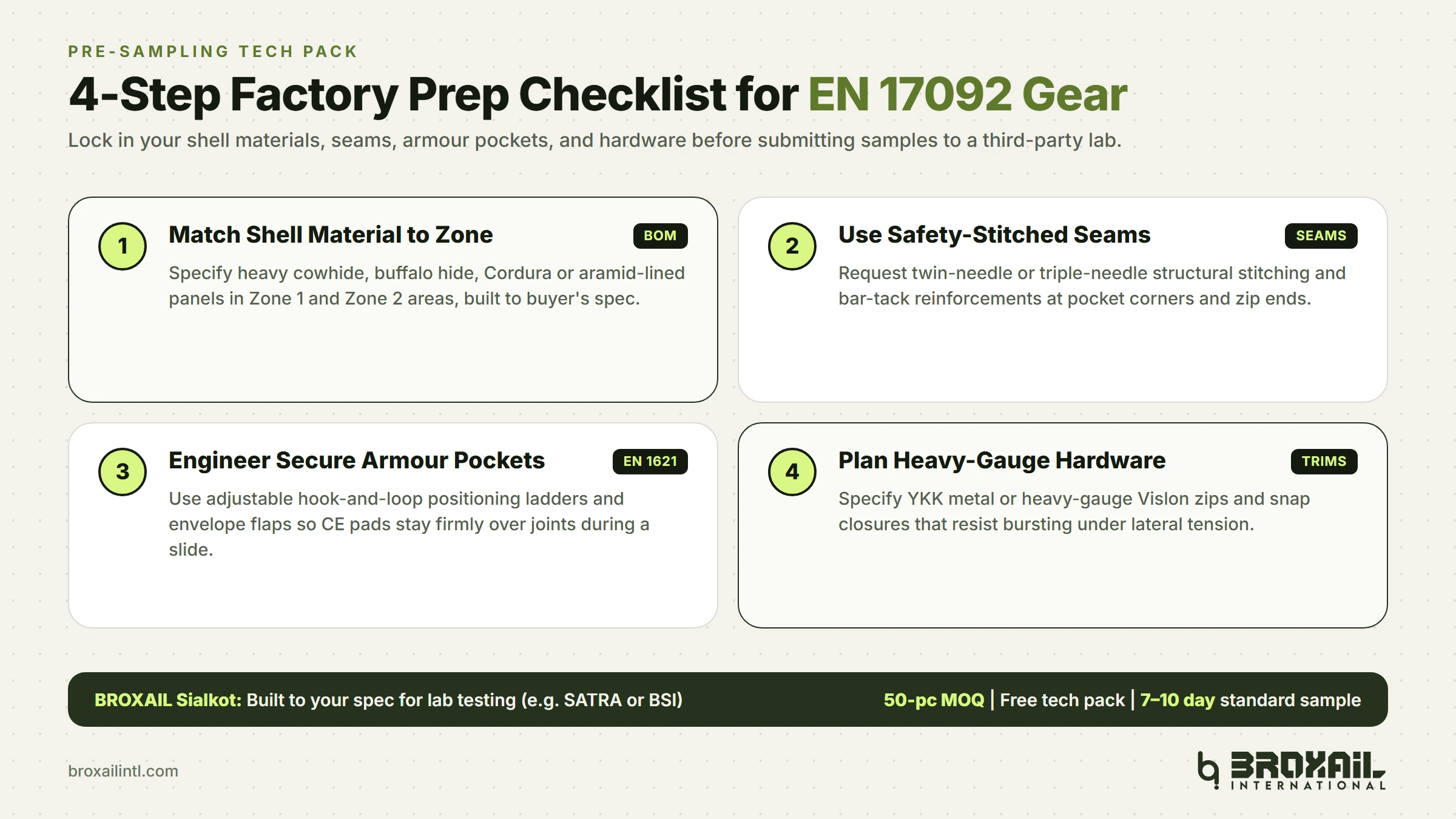
Preparing your garment specifications before sampling reduces the risk of failing an expensive third-party lab test. Because BROXAIL builds leather apparel and woven textile motorbike gear to buyer’s spec, you control every hide thickness, textile denier, thread weight, and hardware choice in your Bill of Materials.
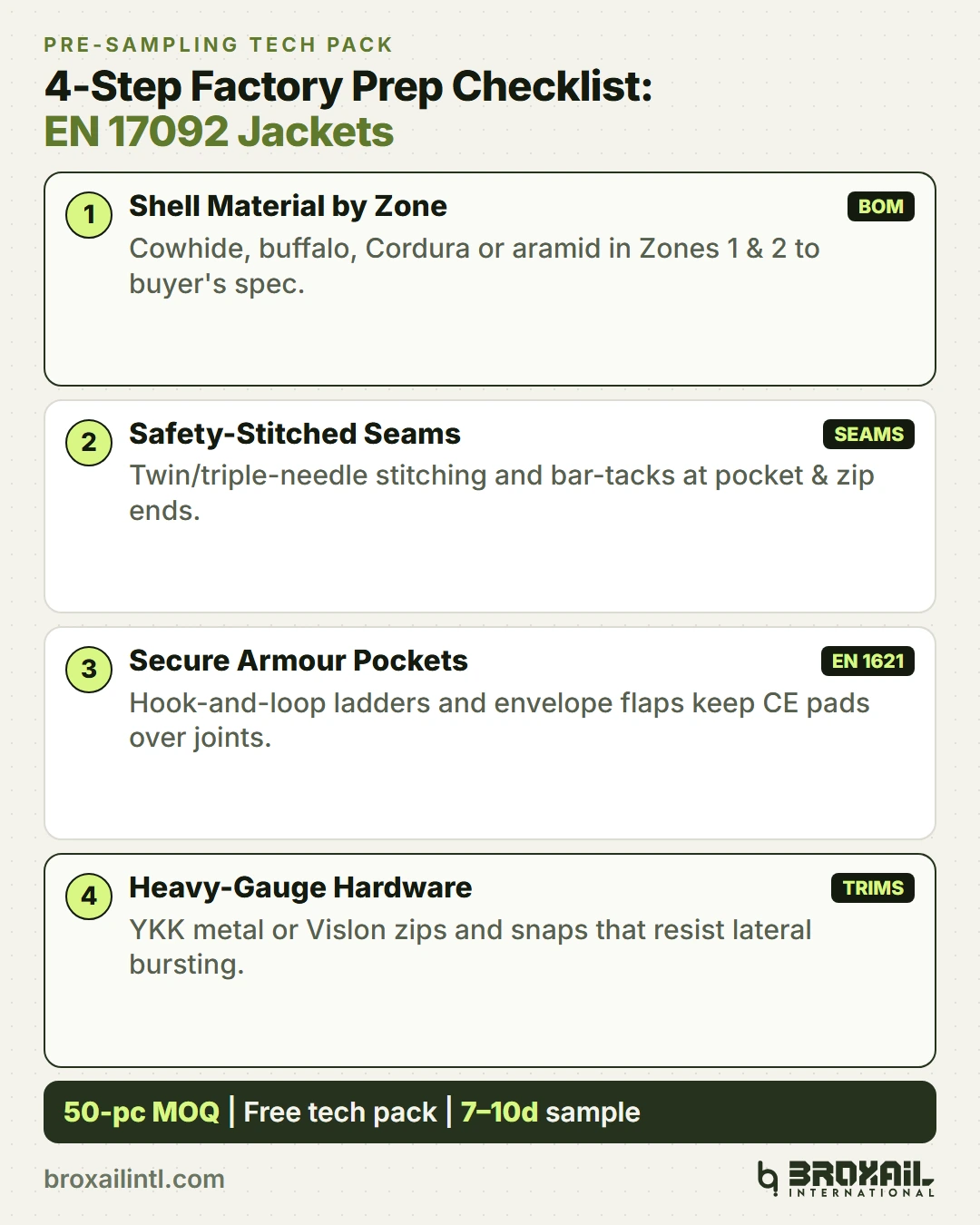
- Match Shell Materials to Your Target Class: Specify heavy cowhide, buffalo hide, or high-tenacity woven shells such as Cordura or aramid-lined panels in Zone 1 and Zone 2 areas. Compare hide options in our types of leather for jackets guide.
- Use Safety-Stitched Seams: Request twin-needle or triple-needle structural stitching and bar-tack reinforcements at pocket corners and zip ends in high-stress zones.
- Engineer Secure Armour Pockets: Internal elbow and shoulder pockets must hold CE protectors firmly over the joint. Adjustable hook-and-loop positioning ladders and secure envelope flaps prevent pads from shifting or twisting during a slide.
- Plan Branded Hardware Early: Specify YKK metal or heavy-gauge Vislon zips and snap closures that resist bursting under lateral tension.
How does BROXAIL build motorcycle gear for buyer lab testing?
BROXAIL International manufactures private-label riding jackets, trousers, and leather suits to your technical specification so you can submit finished garments to an accredited third-party laboratory such as SATRA or BSI for EN 17092 certification. We do not run internal CE certification testing in-house; instead, our Sialkot factory builds every shell, seam, and armour pocket accurately to the spec sheet your testing house requires.
First, send us your reference photos, sketches, or benchmark garment, and we prepare a free tech pack covering graded patterns, seam callouts, and internal pocket placement. Next, we cut and sew standard prototypes in 7 to 10 days. Complex styles, imported materials, or custom-made hardware take longer depending on how complex the piece is.
Once you test your sample, complete any third-party lab checks, and approve the final fit, bulk production takes 3 weeks at a 50-piece MOQ per style and design. We ship to over 40 countries, offering door-to-door courier delivery for most new brands and FOB freight for larger brands that book their own shipping.
You can browse our motorbike apparel range, review our leather jacket manufacturer page, or inspect our quality control workflow to see how we check stitching and measurements before dispatch.
FAQs
What is the difference between EN 17092 and EN 1621?
EN 17092 certifies the complete motorcycle garment (shell, seams, tear strength, and ergonomics), while EN 1621 certifies the removable impact protectors inside the pockets. Both standards work together under European PPE rules.
Which EN 17092 class is most common for touring and street jackets?
Class AA (EN 17092-3) is the standard benchmark for touring and highway riding jackets, while Class A (EN 17092-4) is common for lighter urban commuting jackets. Class AAA (EN 17092-2) is reserved for track racing leathers and heavy-duty gear.
Does BROXAIL perform CE or EN 17092 laboratory testing in-house?
No. We manufacture custom motorcycle garments and internal armour pockets strictly to your technical specification so your brand can submit samples to an independent, accredited laboratory (such as SATRA or BSI) for official EN 17092 testing.
What is the minimum order quantity for custom motorcycle jackets?
Our MOQ is 50 pieces per style and design, which you can split across multiple sizes within one style. Every order includes a free tech pack and 7 to 10 day sampling for standard styles.
Can I supply my own CE Level 1 or Level 2 armour inserts?
Yes. You can ship your own branded CE protectors to our Sialkot factory for insertion, or specify pocket dimensions in your tech pack so your garments fit standard EN 1621-1 and EN 1621-2 pads.
Planning a custom motorcycle jacket or riding trouser line built for EN 17092 lab submission? Send your design references, target class, and size breakdown on our Request a Quote page to start with a free tech pack.

Written by
Muhammad Abubakar
Muhammad Abubakar runs BROXAIL International, a custom leather and textile apparel manufacturer in Sialkot, Pakistan. He works with brands, labels and wholesalers from the first sample to delivery.