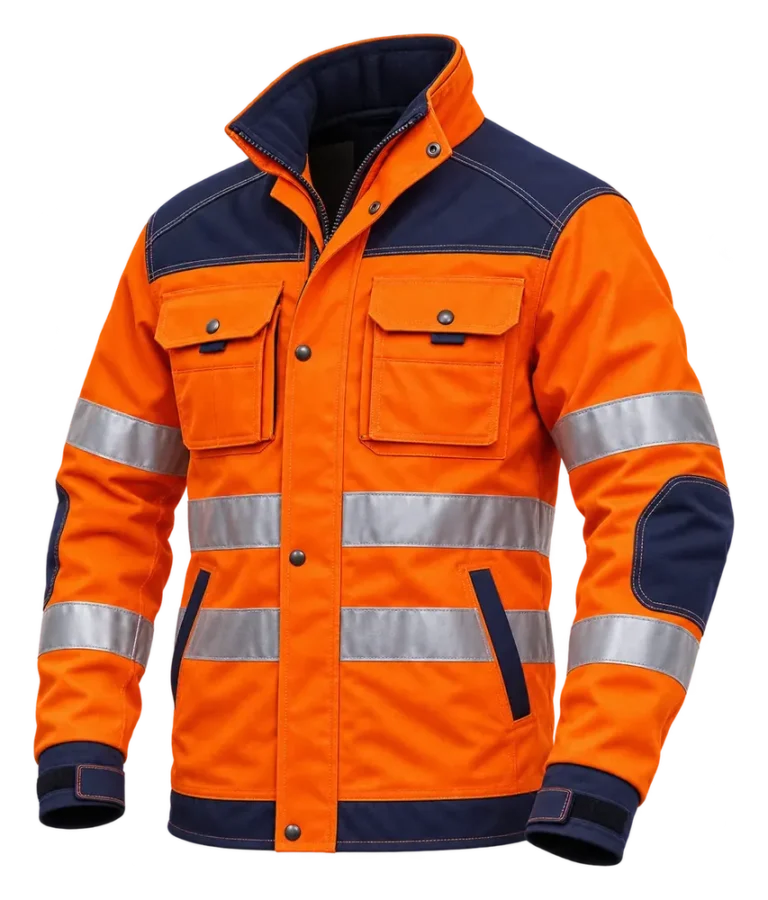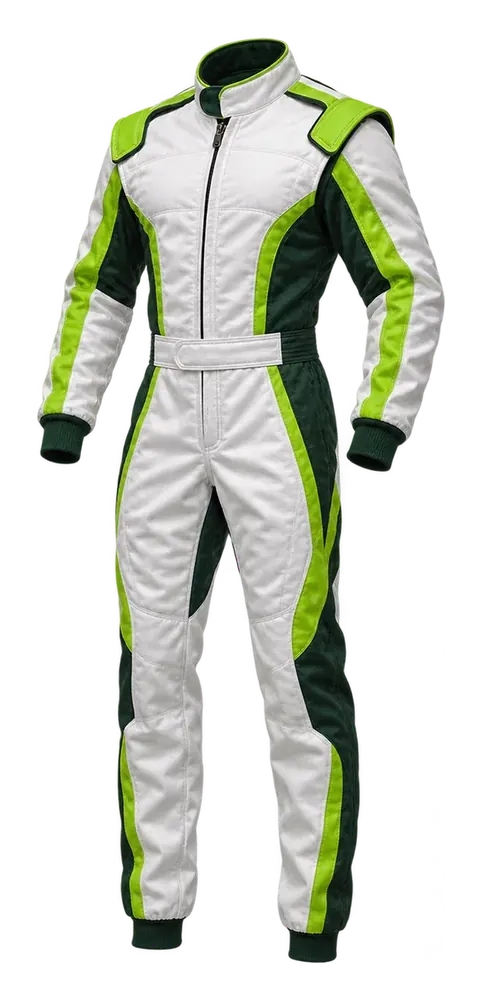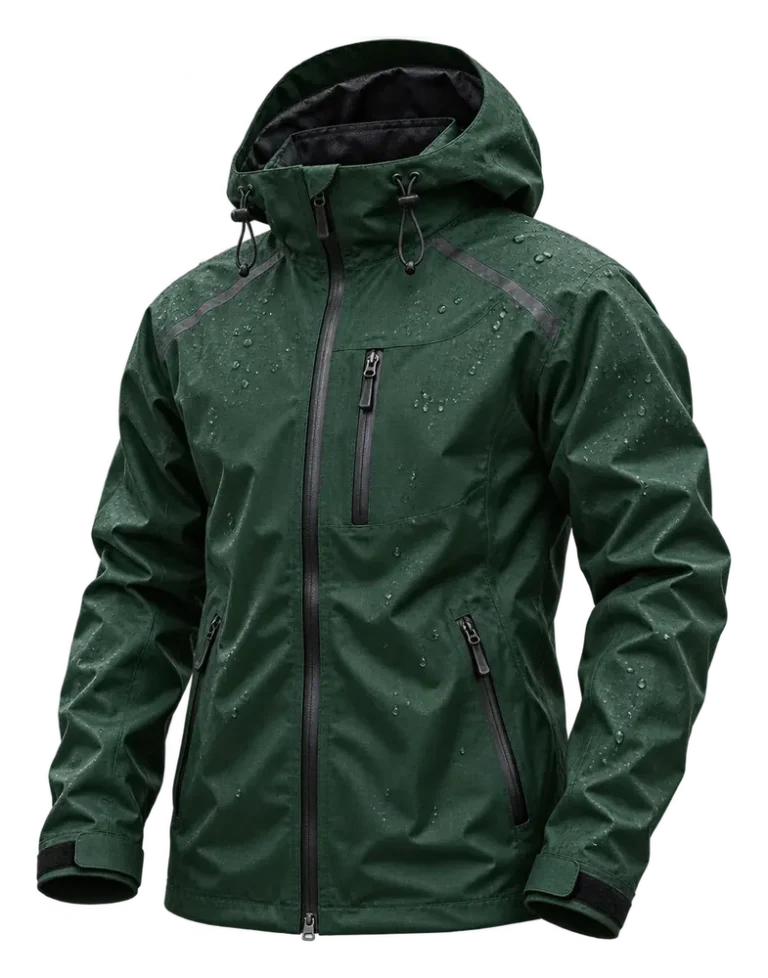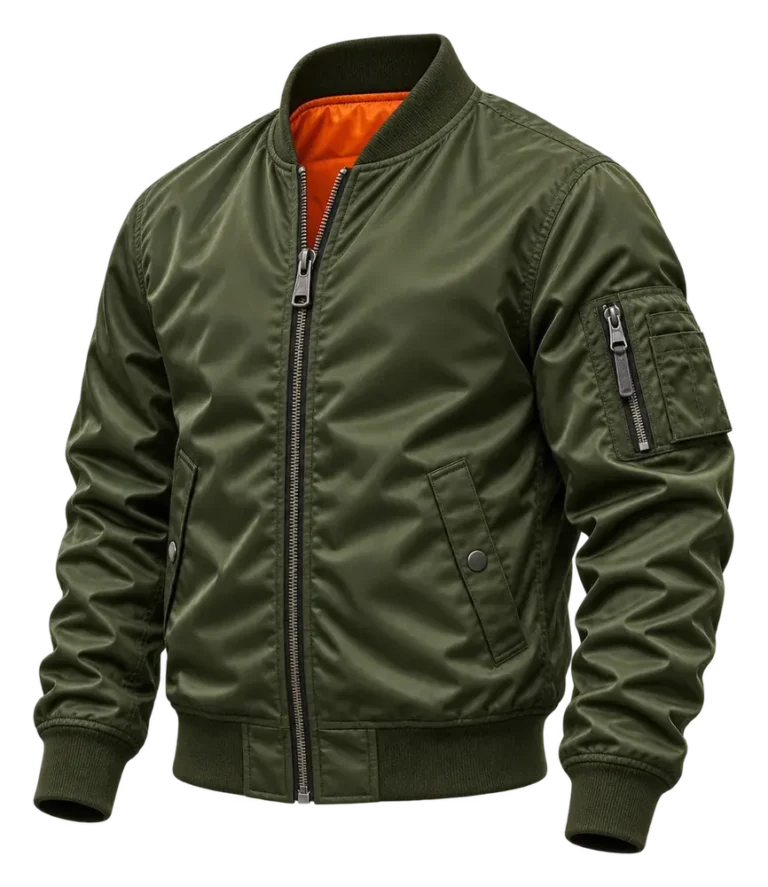
How to Make a Tech Pack for Outerwear
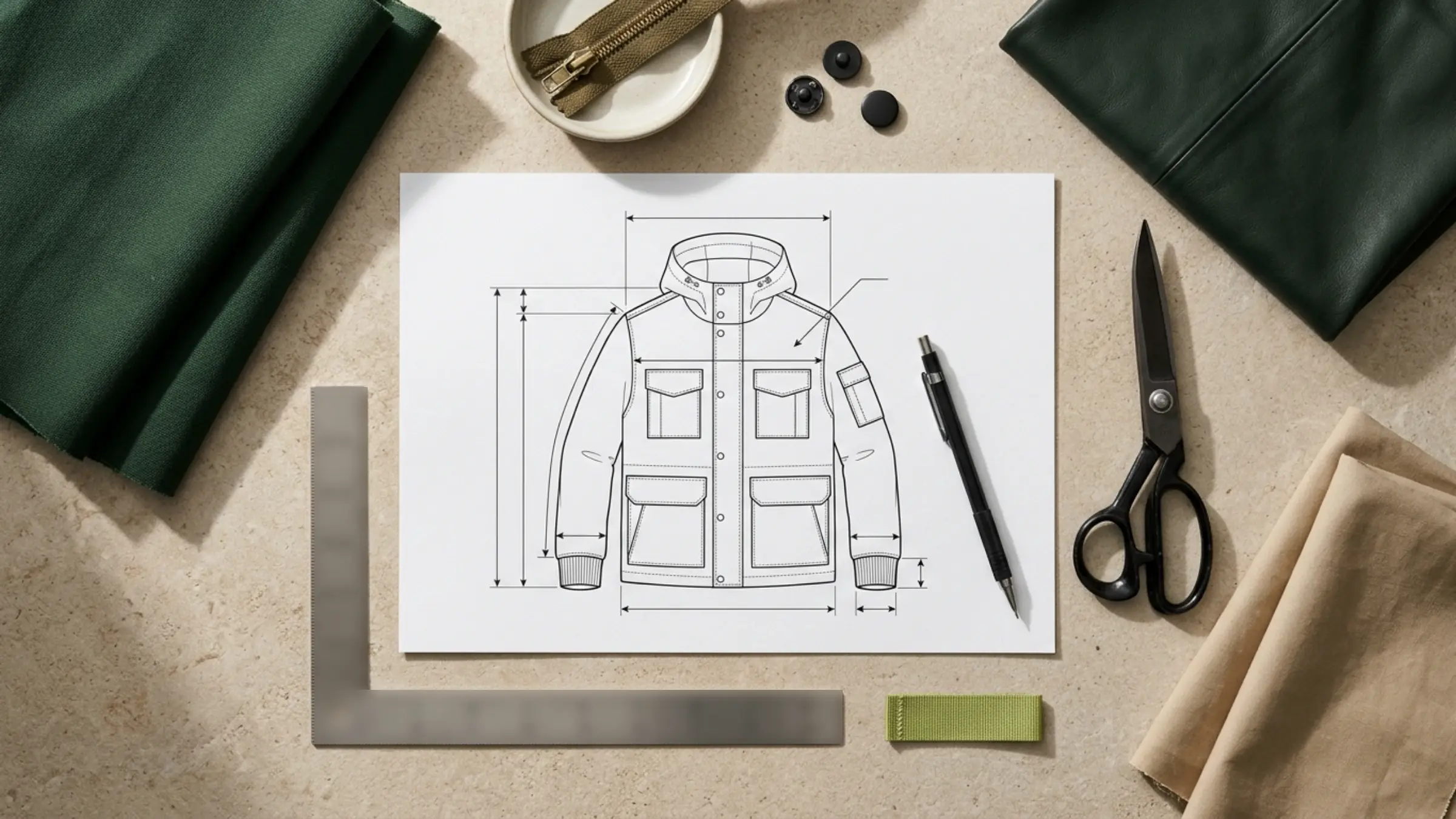
Learning how to make a tech pack for outerwear is the fastest way to get an accurate factory quote and a clean first sample. A tech pack (technical package) is the production blueprint that tells a garment manufacturer exactly how your jacket or coat should be cut, stitched, trimmed, measured, and packed.
Unlike a basic T-shirt, outerwear combines multiple layers: an outer shell, lining, interlining, insulation, and heavy hardware. If those details are missing, a factory has to guess, which delays sampling and creates costly revisions.
At BROXAIL International in Sialkot, Pakistan, we accept orders starting at 50 pieces per style and design, include a tech pack free with order, and complete standard samples in 7 to 10 days (complex styles, imported materials, or custom-made trims take longer depending on complexity). Even if you start with reference photos, knowing what goes into an outerwear tech pack helps you brief any factory clearly.
Key takeaways
- Multi-Layer Blueprint: Learning how to make a tech pack for outerwear means specifying outer shells, linings, interlinings, insulation weights, and branded hardware.
- Core Pages Included: Combine clear technical flat sketches, a complete Bill of Materials (BOM), graded Points of Measure (POM), and stitch/seam callouts.
- Production-Ready Formats: Send a multi-page PDF alongside editable vector artwork (AI or EPS), or start with reference photos and target size specs.
- Low-MOQ Terms: 50 pieces per style and design, tech pack free with order, 7 to 10 day standard sampling (custom hardware longer), and about 3 weeks bulk.
What is an outerwear tech pack and why do factories need one?
An outerwear tech pack is a multi-page specification document that translates your jacket design into measurable factory instructions. It replaces vague verbal descriptions with exact drawings, material codes, stitch standards, and garment measurements.
Without a tech pack, two pattern makers reading the same reference photo will draft different armhole depths, collar heights, and pocket placements. Clear documentation protects both your brand and the factory floor during cutting, sewing, and final inspection.
Every tech pack also serves as the quality control benchmark when bulk production finishes. At BROXAIL, bulk production takes about 3 weeks after you approve your sample, and our quality team checks finished garments against the agreed tech pack tolerances.
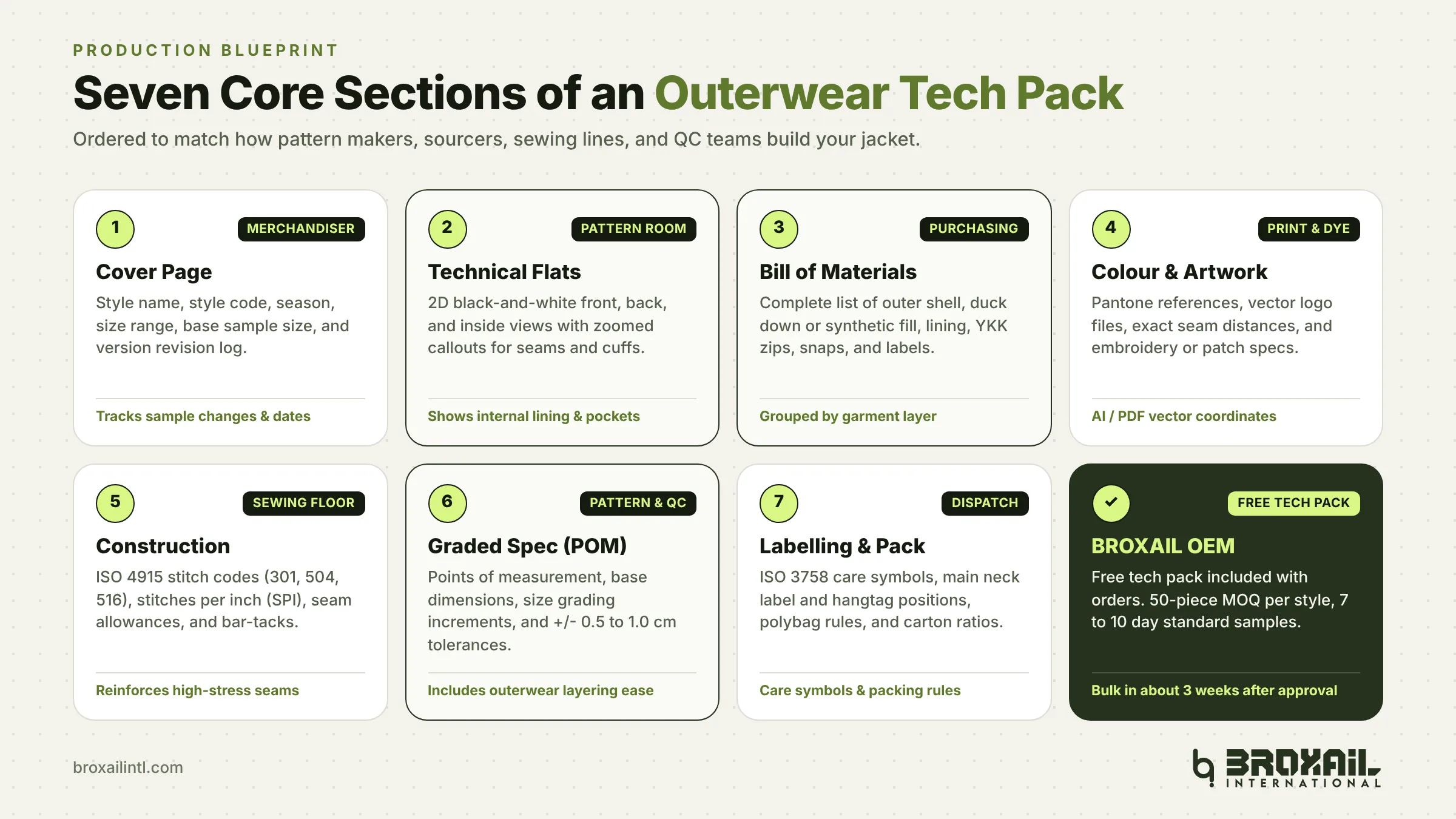
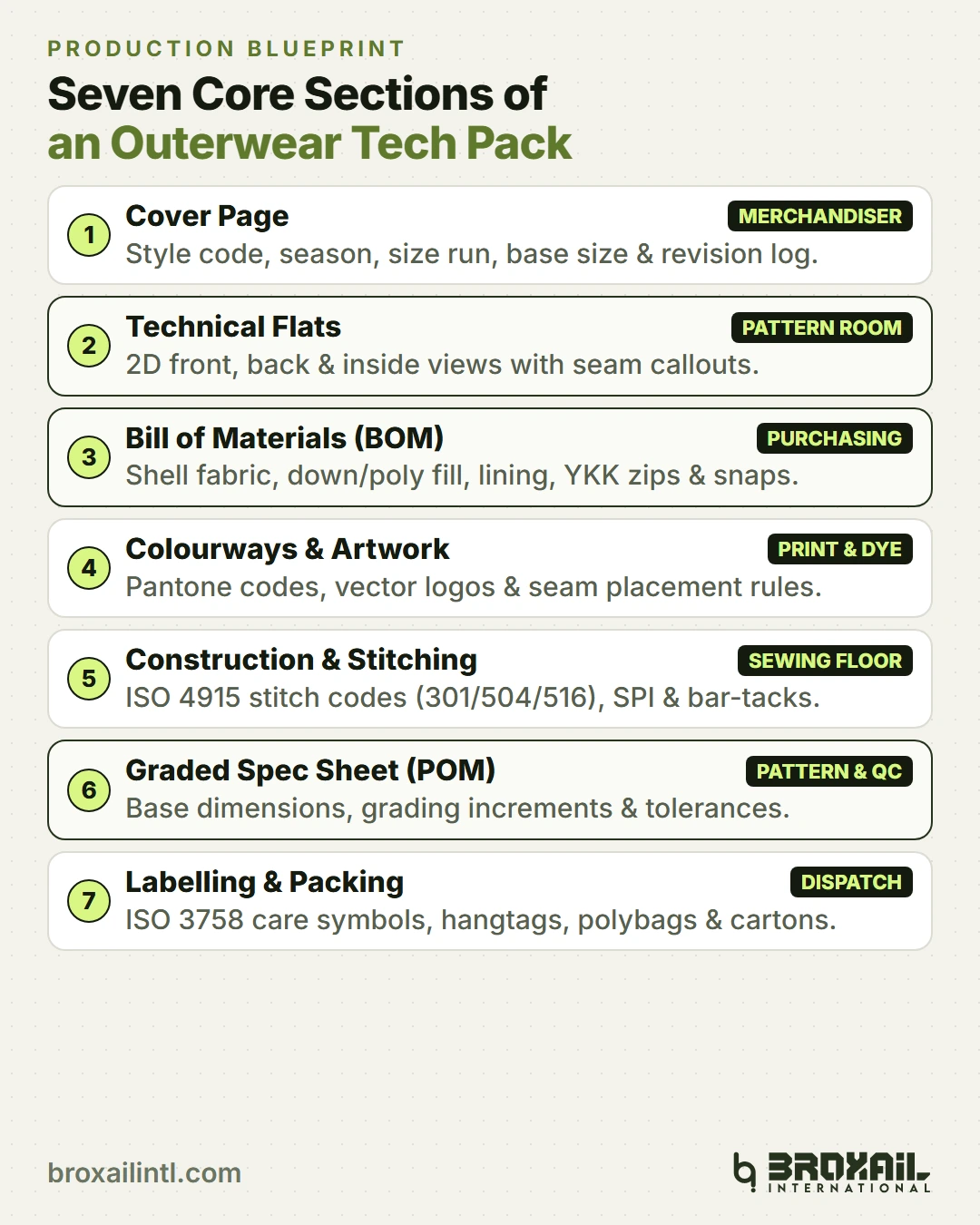
How to make a tech pack for outerwear: 7 core sections
A complete outerwear tech pack needs seven core sections arranged in the same order a factory team uses them. Keeping the layout consistent lets pattern makers, fabric sourcers, and sewing supervisors read their section without hunting through emails.
| Tech Pack Section | Who Uses It in the Factory | What It Must Contain |
|---|---|---|
| 1. Cover Page | Merchandiser and Account Lead | Style name, style code, season, size range, base sample size, and revision date |
| 2. Technical Flats | Pattern Maker and Sample Room | Black-and-white 2D front, back, and inside views with close-up callouts |
| 3. Bill of Materials (BOM) | Purchasing and Trim Store | Every shell fabric, lining, fill, zip, snap, thread, and label |
| 4. Colourways and Artwork | Dye House, Print, and Embroidery | Pantone codes, logo files, placement distances, and application method |
| 5. Construction and Stitching | Sewing Floor Supervisors | Stitch types, stitches per inch (SPI), seam allowances, and reinforcement |
| 6. Graded Spec Sheet (POM) | Pattern Maker and QC Inspectors | Points of measurement, base size dimensions, grading rules, and tolerances |
| 7. Labelling and Packing | Finishing and Dispatch Team | Care label symbols, hangtag placement, polybag rules, and carton ratios |
Include a revision history table on the cover page from day one. Whenever you adjust a pocket width or swap a zip finish after receiving a sample, log the version number and date so the sewing line never works from an outdated PDF.
How do you draw technical flats for a jacket or coat?
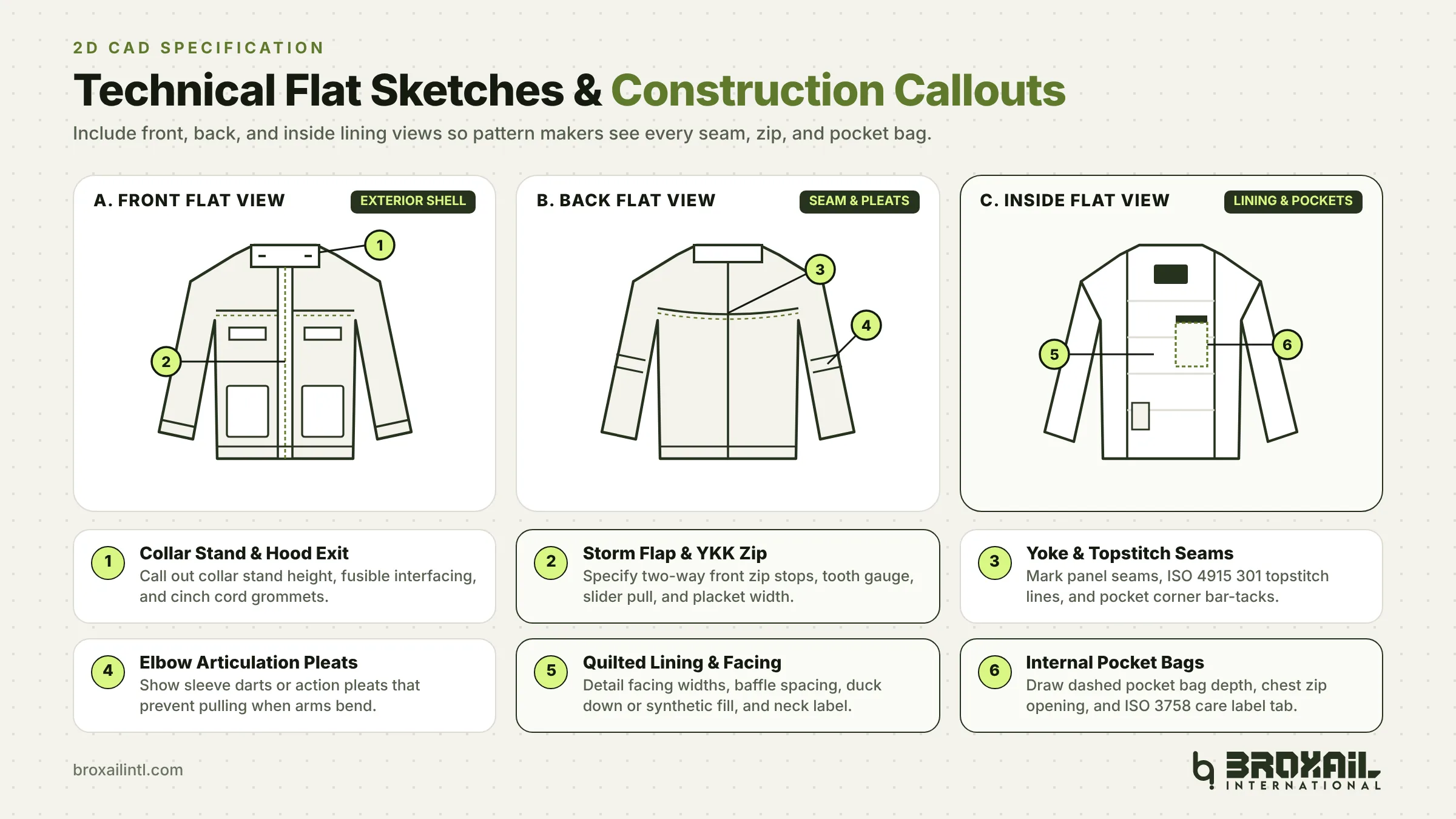
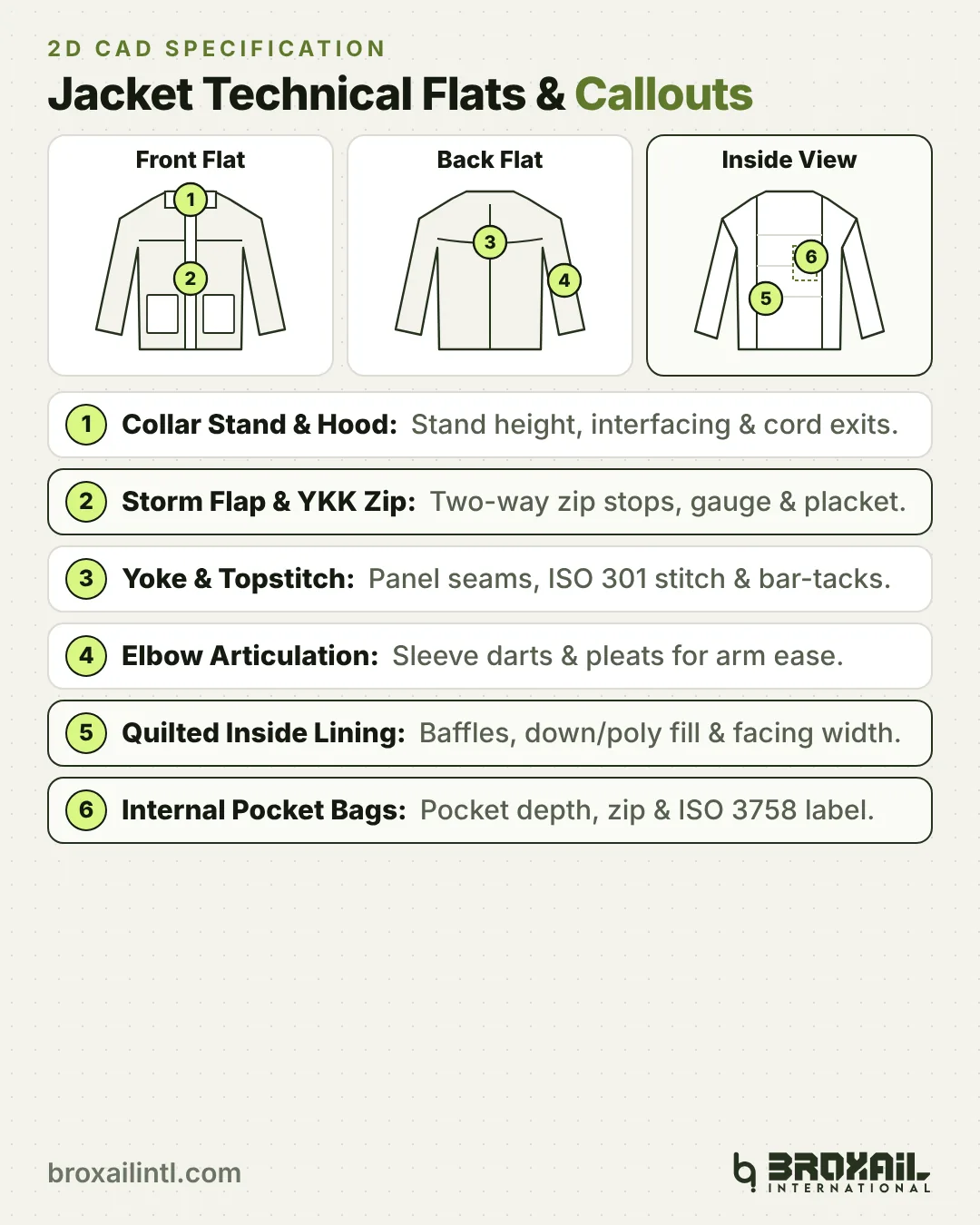
Technical flats (CAD drawings) are clean, black-and-white 2D line drawings showing the garment laid flat from the front, back, and inside. They are not fashion illustrations on a model, because a pattern maker needs to see true proportions, seam lines, and symmetry.
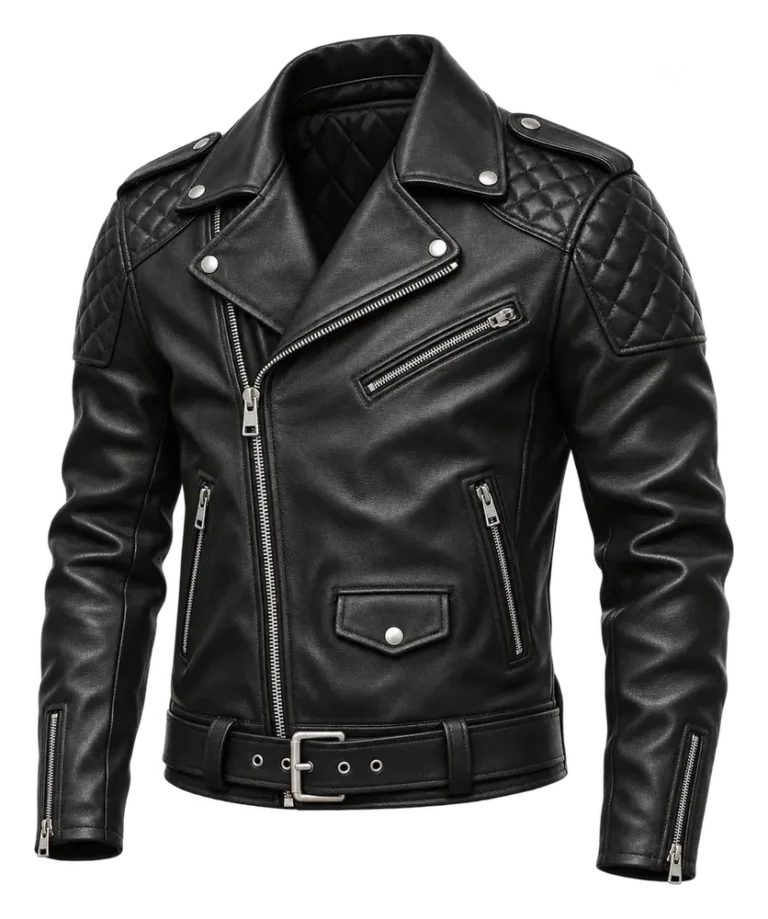
Draw every panel seam, dart, yoke, storm flap, cuff tab, and topstitch line clearly. For multi-layer outerwear such as waterproof shells, puffer jackets, or leather biker jackets, always include an inside view showing pocket bags, facing widths, quilted lining patterns, and internal zip pockets.
Add zoomed-in callout boxes beside the main flats for complex areas. Common callouts on outerwear include collar stand height, hood cinch cord exits, two-way front zip stops, and elbow articulation pleats.
How do you build a Bill of Materials (BOM) for outerwear?
A Bill of Materials (BOM) is the complete shopping list of every physical component required to build one garment. In outerwear, forgetting a small item such as fusible collar interfacing or cord locks stalls the entire sample room.
Group your BOM by component layer so nothing is missed:
- Outer shell fabric or hide: Specify material type, weight, and finish to your exact specification. For example, BROXAIL manufactures puffer jackets using bubble fabric (40 to 50 GSM) as our confirmed puffer shell, while all other shell fabrics, leather hides, and grammages are sourced to the buyer’s spec.
- Insulation or fill: State whether the jacket uses duck down fill or synthetic (polyester) fill (both are offered at BROXAIL), along with the target fill weight or warmth level.
- Lining and interlining: List body lining, sleeve lining, pocket bag fabric, and fusible interfacing for collars, plackets, and cuffs.
- Closures and hardware: Name the exact closure type and brand where required, such as YKK metal or Vislon zips, snap buttons, Velcro tabs, grommets, and drawcord toggles.
- Thread and seam tape: Note thread composition and colour matching, plus waterproof seam tape width if the jacket requires taped seams.
- Labels and trims: Include woven main labels, size tabs, care labels, and hangtags.
If you do not yet know the exact GSM or hardware code for your design, state the target look and performance level instead. Our sourcing team in Sialkot works to buyer specifications across all six ranges: leather apparel, motorbike gear, workwear, outdoor apparel, fashion wear, and woven sportswear.
Which measurements belong on an outerwear spec sheet?
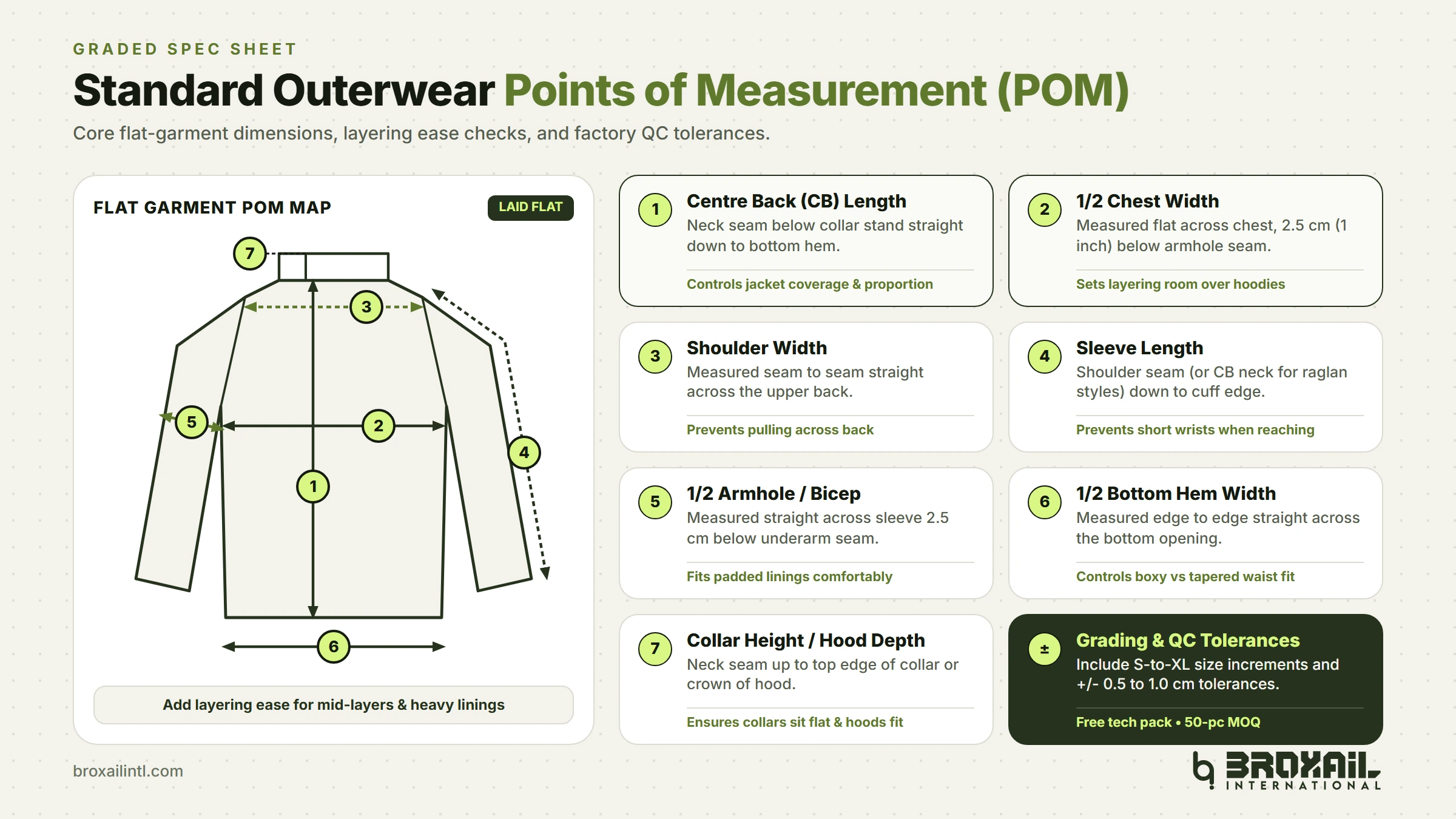
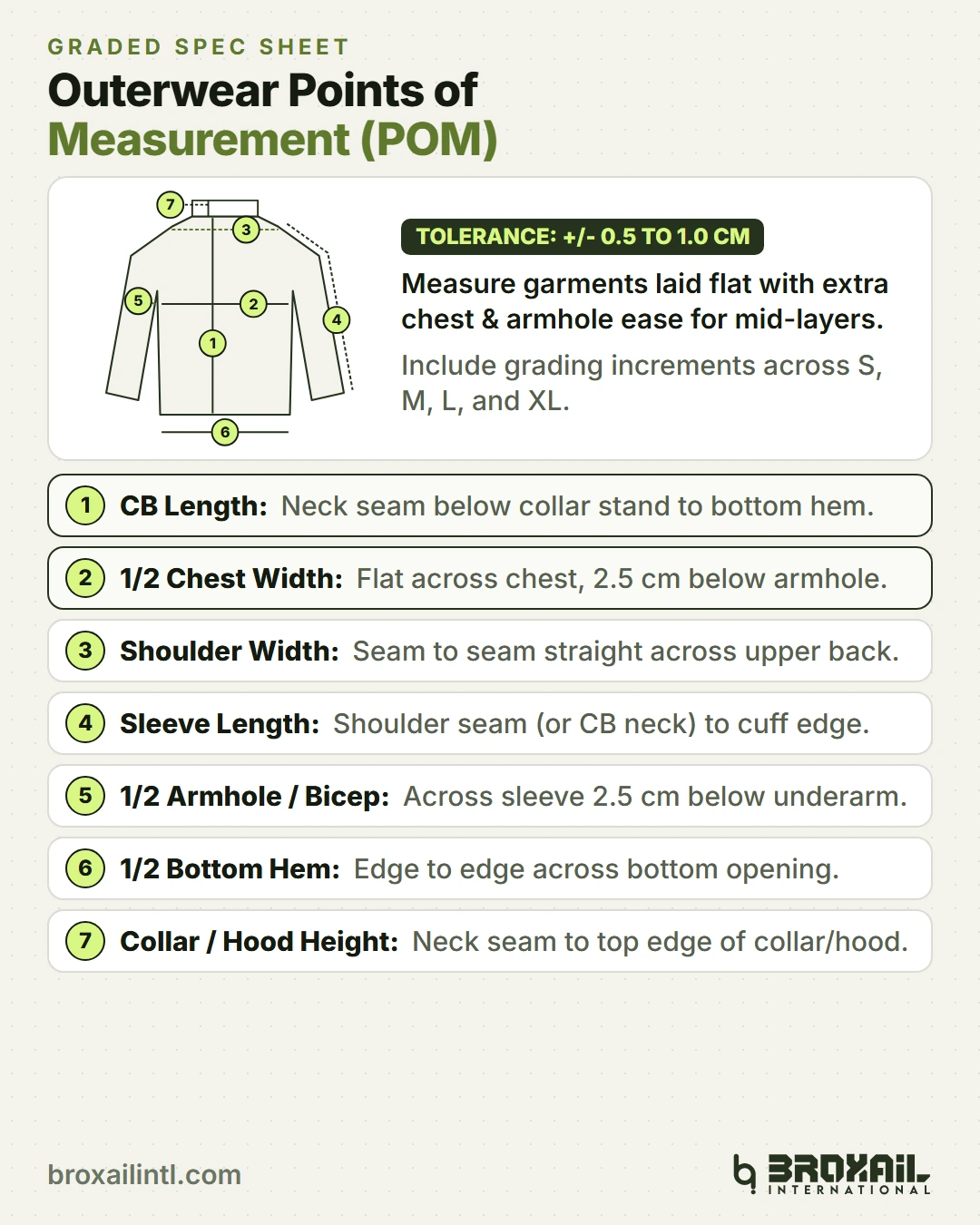
Your measurement specification sheet defines every Point of Measurement (POM) for your base sample size and shows how each dimension scales across your size run. Outerwear requires extra chest and sleeve ease compared with shirts or knitwear because buyers wear jackets over mid-layers.
| Point of Measurement (POM) | How to Measure on a Flat Garment | Why It Matters in Outerwear |
|---|---|---|
| Centre Back (CB) Length | Neck seam below collar stand straight down to bottom hem | Controls overall jacket coverage and proportion |
| 1/2 Chest Width | Flat across chest, 2.5 cm (1 inch) below armhole seam | Determines layering room over hoodies or knitwear |
| Shoulder Width | Seam to seam straight across upper back | Sets shoulder drop and prevents pulling across the back |
| Sleeve Length | Shoulder seam (or CB neck for raglan) down to cuff edge | Prevents short wrists when arms reach forward |
| 1/2 Armhole / Bicep | Straight across sleeve 2.5 cm below underarm seam | Keeps heavy fabrics and linings comfortable under the arm |
| 1/2 Bottom Hem Width | Edge to edge across the bottom opening | Controls boxy vs tapered fit at the waist or hip |
| Collar Height / Hood Depth | Neck seam to top edge of collar or crown of hood | Ensures collars sit flat and hoods clear the forehead |
Always include grading rules (for example, how many centimetres the chest and length increase from S to M to L) and acceptable tolerances. Because thick hides, canvas, and padded linings behave differently from light jersey, outerwear specs commonly note tolerances such as plus or minus 0.5 cm to 1.0 cm on core body measurements.
You can check our dedicated custom clothing size chart guide when setting up your base size curve.
What stitching, construction, and labelling details must you specify?
Construction callouts tell the sewing floor how seams are joined, reinforced, and finished. Referencing international standards removes guesswork when working with export factories.
For sewing, many tech packs reference ISO 4915 stitch classifications, such as 301 lockstitch for clean woven seams and topstitching, 504 overlock for neatening raw interior edges, and 515 or 516 safety stitches for high-stress workwear seams. Specify stitches per inch (SPI), seam allowances, and bar-tack locations at pocket corners or belt loops.
For artwork and branding, supply vector files (AI or PDF) with exact placement coordinates measured from a fixed seam, such as “left chest logo centred 8 cm below shoulder seam and 5 cm from centre front”. Also state the application method, such as direct embroidery, woven patch, chenille patch, or heat transfer.
For care labels, use the standard graphic symbols under ISO 3758 (the international care labelling system used with GINETEX). These symbols cover the UK and EU. However, the US, Canada, and Australia have their own care label rules, so confirm the format for each market before the labels go to print.
What if you do not have a finished tech pack yet?
You do not need to hire an expensive freelance pattern designer before contacting a factory. Many startup founders and growing brands start with clear reference photos, a rough sketch, and a target measurement chart from an existing jacket they like.
At BROXAIL International, a tech pack free with order is included with your manufacturing order. Send us your reference images, fabric preferences, and size range, and our pattern team prepares the production specification sheet for your approval before cutting a sample.
Standard styles take 7 to 10 days for sampling, followed by about 3 weeks for bulk production once you approve the sample. Whether you need door-to-door delivery or prefer to book your own FOB freight, we support both options across 40+ countries.
Common outerwear tech pack mistakes to avoid
Review your file against these five frequent errors before sending it to any factory:
- Missing inside construction views: Leaving out lining attachment, pocket bag depth, or facing width forces the sample maker to improvise.
- No hardware sizing: Writing “metal zip” without specifying tooth gauge, finish, or slider type (single vs two-way) leads to mismatched trims.
- Copying t-shirt ease onto jackets: Failing to add layering room in the chest and armhole produces a tight, unwearable sample.
- Unmarked tolerance limits: Without stated tolerances, quality control inspections become subjective arguments.
- Mixing up knitted and woven specs: Knit and woven fabrics need different ease, seam types, and tolerances. So keep them on separate spec sheets, even when one jacket uses both (for example, a woven shell with knit rib cuffs).
You can review how our factory turns approved tech packs into finished garments on our clothing manufacturing process and quality control pages.
FAQs
Do I need a tech pack before contacting an outerwear manufacturer?
No. While a finished tech pack speeds up quoting, BROXAIL includes a tech pack free with order when you place an order. You can start by sending reference photos, sketches, and your target size measurements.
What file format should a tech pack be in?
Send your tech pack as a multi-page PDF for easy viewing on the factory floor, alongside editable vector artwork files (AI or EPS) for logos, prints, and embroidery.
How many pieces do I need to order once my tech pack is ready?
At BROXAIL International, the minimum order quantity (MOQ) is 50 pieces per style and design across all six manufacturing ranges, split across your chosen sizes.
How long does sampling take after submitting a tech pack?
Standard outerwear samples take 7 to 10 days. Complex styles, imported materials, or custom-made trims and hardware take longer depending on the complexity of the garment.
Can I include YKK zips or Cordura fabric in my tech pack BOM?
Yes. Specifying recognised component and material brands such as YKK zips, Cordura, Kevlar, Gore-Tex, or 3M reflective tape helps the factory quote accurately to your required performance level.
What is the difference between a tech pack and a pattern?
A tech pack is the full specification document (flats, BOM, measurements, and packing rules) created by the brand or factory merchandiser. A pattern is the physical or digital cutting template drafted from that tech pack to cut fabric panels.
Call to action
Ready to turn your jacket idea into a factory-ready specification? Send your sketches or reference photos via our Request a Quote page to start with a tech pack free with order and a 50-piece MOQ.

Written by
Muhammad Abubakar
Muhammad Abubakar runs BROXAIL International, a custom leather and textile apparel manufacturer in Sialkot, Pakistan. He works with brands, labels and wholesalers from the first sample to delivery.