Custom Clothing Size Chart: How Grading and Tolerances Work
How to build a custom clothing size chart: garment measurements, grading, tolerances and colour matching with Pantone and lab dips.
Key takeaways
- A custom clothing size chart lists the finished garment measurements for every size, not body measurements.
- Grading is the fixed step between sizes. Tolerances say how far a finished piece may differ from the chart.
- Give colours as a Pantone code or a physical swatch, and approve a lab dip or colour sample before bulk.
- Leather colours are matched to a swatch and can vary slightly between hides, so agree what range is acceptable.
A custom clothing size chart is the document that decides whether your customers keep what they buy or send it back. Get it right and every size fits the way you intended. Get it wrong and you find out after the order has shipped.
Colour works the same way. “Dark green” means something different to everyone in the chain. In this guide we explain how we work with sizes and colours at BROXAIL, and what to send us so your order comes out the way you pictured it.
What goes into a custom clothing size chart
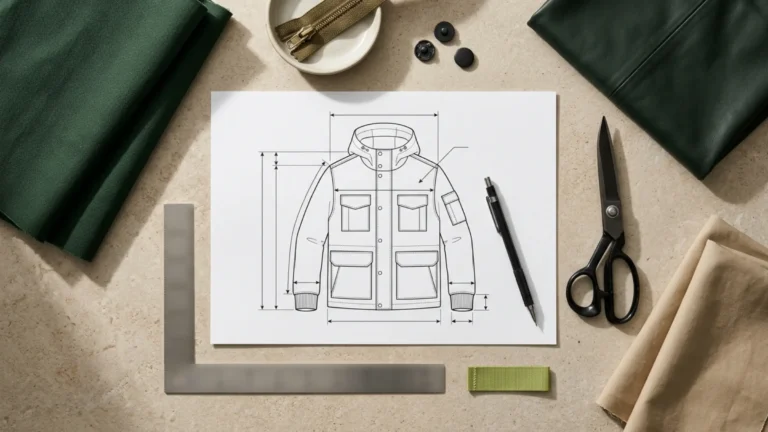
A manufacturer’s size chart is a list of finished garment measurements for each size. It is not a body measurement chart like the ones shoppers see on a product page. It tells the pattern maker and the quality checker exactly how wide, long and deep each part of the garment should be.
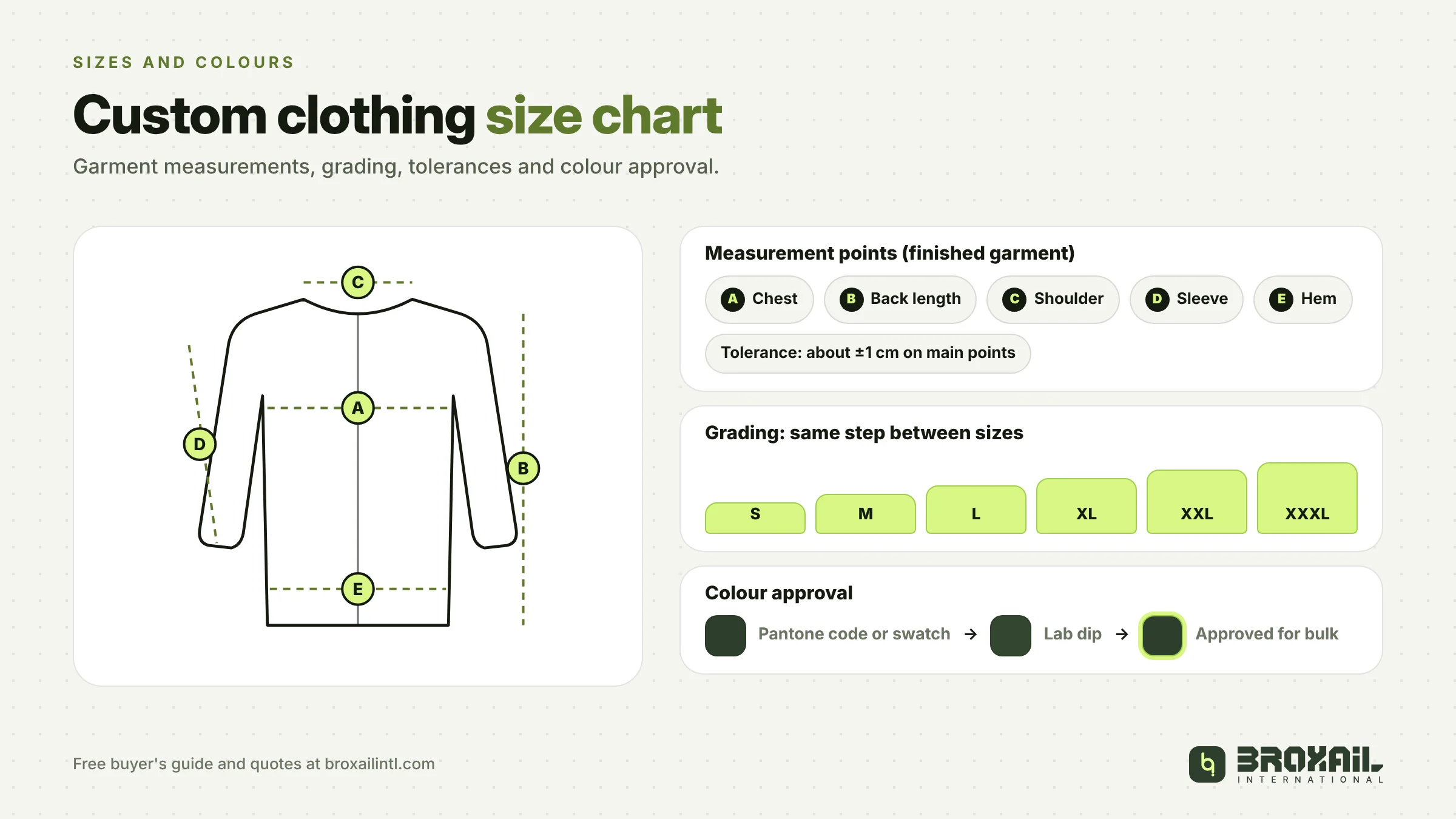
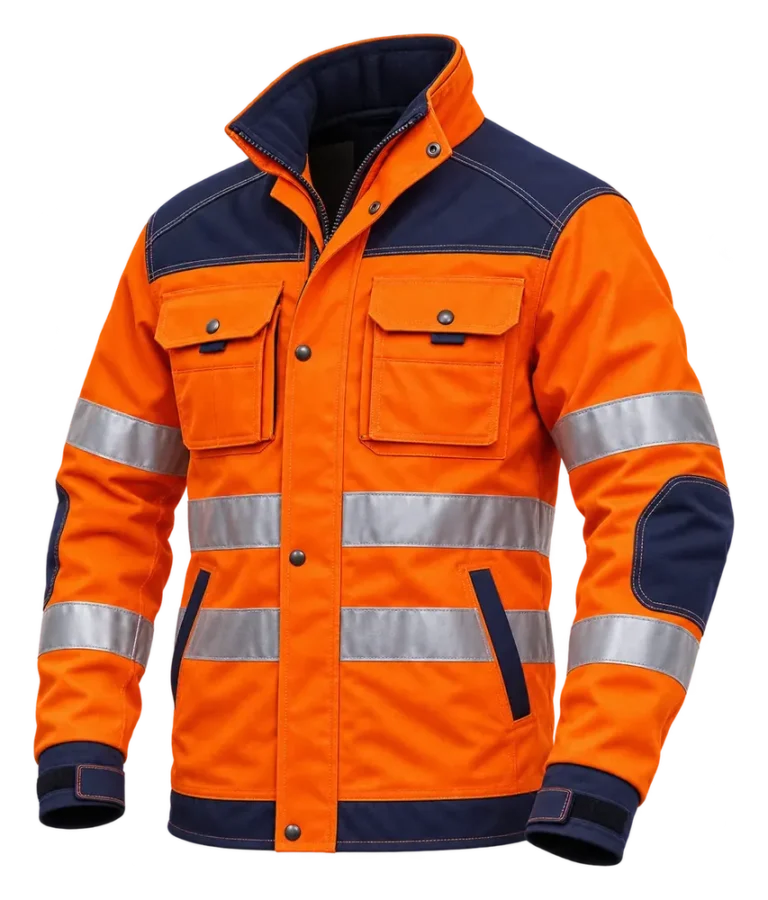
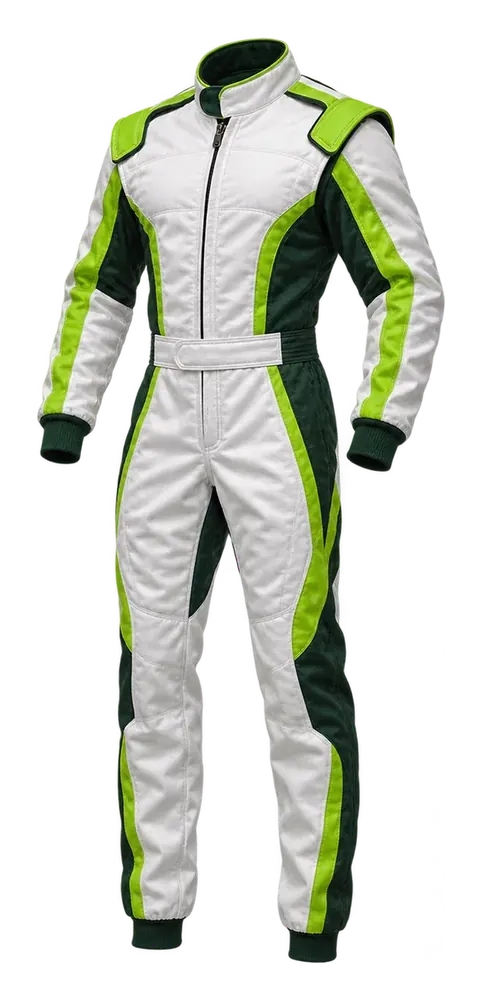
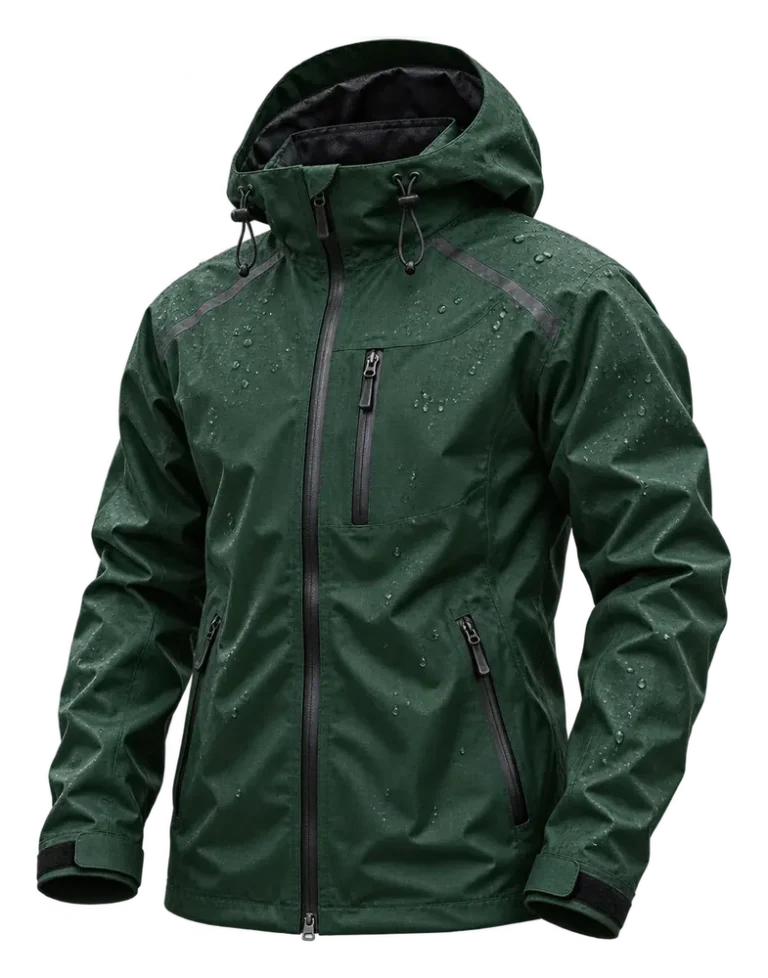
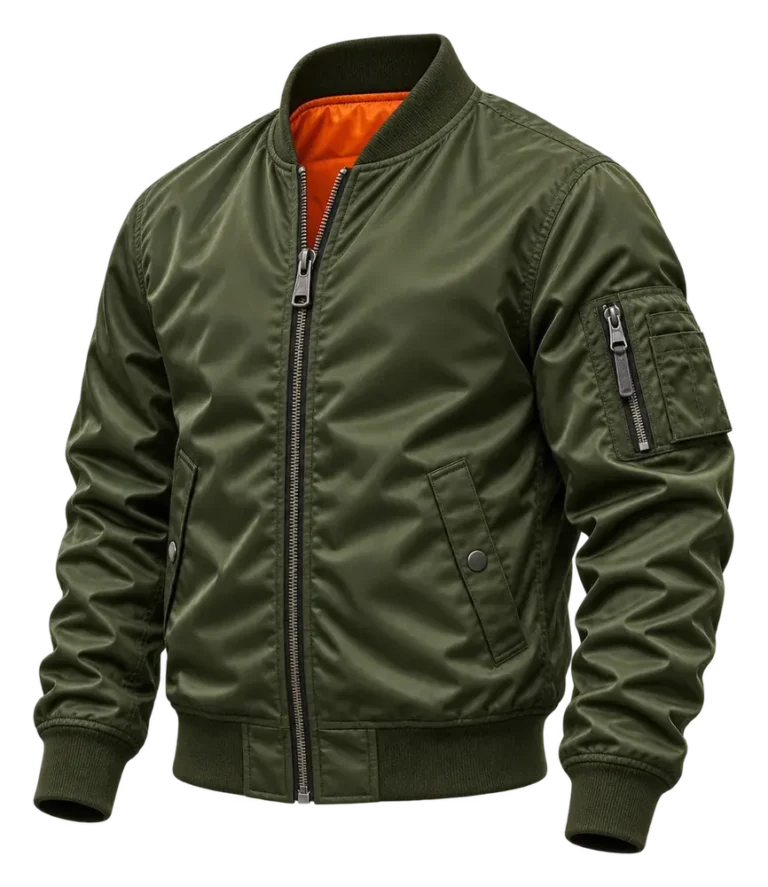
For a jacket, the main points are usually chest, waist, hem, back length, shoulder width, sleeve length and cuff. Trousers need waist, hip, thigh, inseam, outseam and leg opening. Each point should have a short note on how it is measured, for example chest measured flat, one inch below the armhole.
Start from a garment that fits
The easiest way to build your first custom clothing size chart is to take a garment that already fits your ideal customer well and measure it. Send it to us or send the measurements, and we use it as the base size. Every other size is then built from that base.
Grading: how sizes step up and down
On any custom clothing size chart, grading is the rule that tells us how much each measurement changes from one size to the next. For example, a jacket might grow a few centimetres around the chest with each size, and less in sleeve length. These steps are usually fixed so the whole range keeps the same shape.
Our standard range runs from S to XXXL, and we also work to your own custom clothing size chart and graded size specification if you have one. If you sell in different markets, check the size labels too. A UK 40 jacket and a European 50 jacket can be the same garment, and your labels should say so clearly.
Tolerances: how close is close enough?
No two sewn garments are exactly identical, so every size chart needs tolerances. A tolerance is the amount a finished piece may differ from the chart and still pass. Main measurements such as chest and length often allow around one centimetre either way, while small details like a pocket position need less.
Write your tolerances on your custom clothing size chart. During our measurement checks we compare finished pieces against your numbers, so the tolerance is what decides whether a piece passes. If you would like to see where these checks sit in an order, our guide to the clothing manufacturing process explains each stage.
Colour matching: Pantone, swatches and lab dips
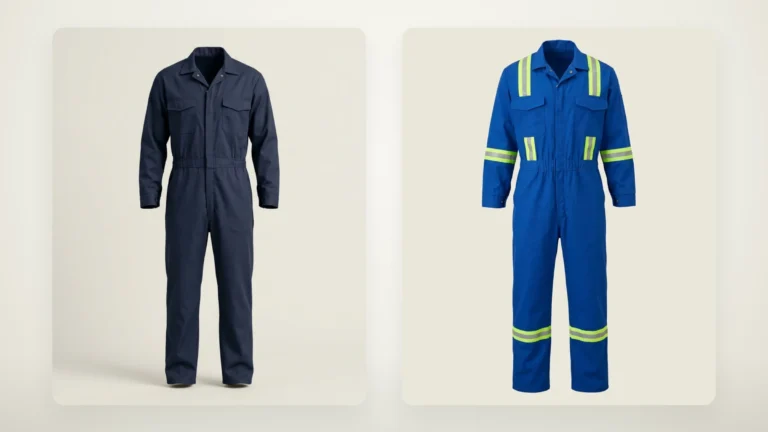
For textiles, the clearest way to give a colour is a Pantone Fashion, Home + Interiors code, the TCX or TPX colours used across the apparel trade. A physical swatch of fabric you like works too. Screen colours are not reliable, because every phone and monitor shows them differently.
Before dyeing the full fabric, a lab dip is made: a small piece dyed to your colour for you to approve. Approve it in daylight and under shop lighting if you can. Once you sign it off, the bulk fabric is checked against it.
Colour in leather
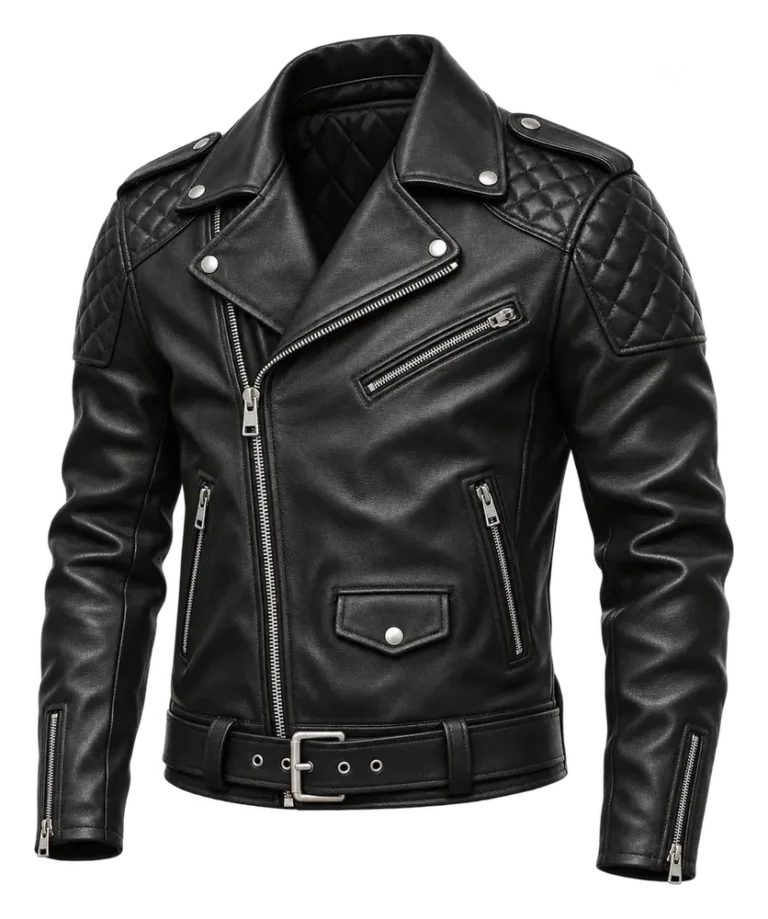
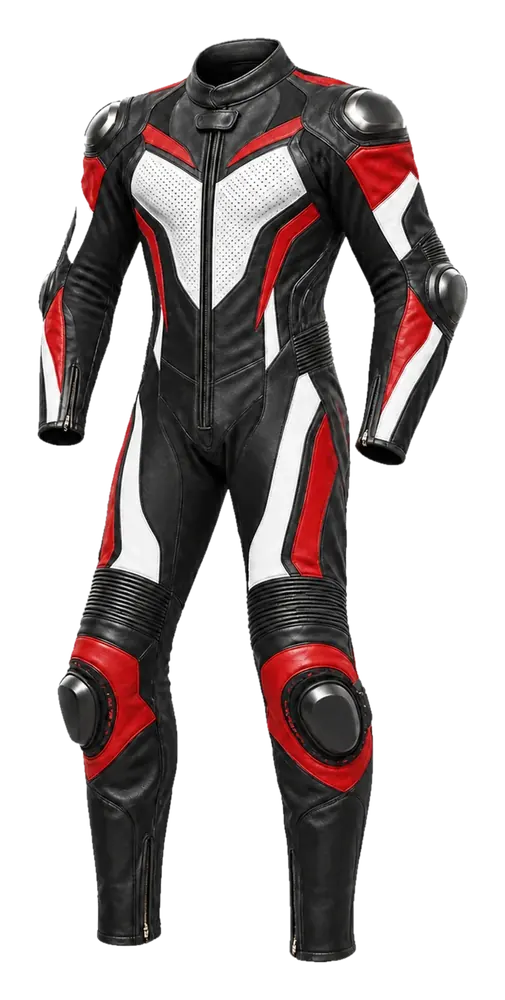
Leather is matched to a swatch rather than a Pantone code, because dye takes differently on every hide. Expect small variations in tone between jackets, especially with aniline and waxed finishes that show the natural surface. We sort hides to keep each order as even as possible, and it helps to agree in advance what range of shade is acceptable. You can see the leathers we use in our leather apparel range.
Default sizes and colours vs fully made-to-spec
Not every order needs a full custom clothing size chart. Every style in our catalogue comes in standard colours and sizes, which is the fastest way to launch under your own label through our private label service. When you want your own fit, your own colours or both, we work to your specification instead.
Made-to-spec takes a little longer at the start because patterns, lab dips and samples need approval. In return, your custom clothing size chart gives you a product that is yours and repeats exactly the same way on every reorder.
Sizing for the USA, UK and Europe
If you sell in more than one market, decide early how your sizes will be labelled. Letter sizes from S to XXXL travel well, but tailored jackets and trousers are often sold in numbers, and those numbers differ: a UK 40 chest and a European 50 can describe the same jacket.
Fit expectations differ too. Some markets prefer a slimmer cut, others a more relaxed one. The simplest approach is to keep one custom clothing size chart as your master garment measurement table and print the matching size for each market on the label, so the product stays the same and only the label changes. Agree this before sampling, because size labels are ordered with the other trims.
Common sizing and colour mistakes to avoid
The mistake we see most often is sending body measurements instead of garment measurements, which leads to garments that are too tight. The second is approving colours on screen. The third is changing the size chart after the sample is approved, which means new patterns and new samples.
Avoid all three by measuring a garment you like, giving colours as a code or swatch, and locking your custom clothing size chart before sampling. Labels count as well: our branding and packaging service covers size labels, care labels and swing tags that match your chart.
Frequently asked questions
What is the difference between a body size chart and a garment size chart?
A body chart lists the measurements of the person. A garment chart lists the finished measurements of the clothing. Manufacturers work from garment measurements, which include ease for movement.
Can you match a Pantone colour?
Yes. For textiles we can work to Pantone TCX or TPX references and send a lab dip for approval before bulk. Leather is matched to a physical swatch.
Which sizes do you offer as standard?
Our standard range runs from S to XXXL. We also work to your own graded size specification.
Do I need to send a sample garment for sizing?
It helps a lot. A garment that already fits your customer well is the fastest way to set the base size, but a measured size chart works too.
Ready to set your sizes and colours?
Send us your custom clothing size chart, a reference garment or just the fit you are aiming for, plus your colours as codes or swatches. We reply with questions and a quote. You can request a quote here, or download our free buyer’s guide (PDF) to see everything we ask for.
To see how point-of-measure tolerances sit alongside trims and bill of materials, check our outerwear tech pack POM guide.

Written by
Muhammad Abubakar
Muhammad Abubakar runs BROXAIL International, a custom leather and textile apparel manufacturer in Sialkot, Pakistan. He works with brands, labels and wholesalers from the first sample to delivery.